Showing posts with label joy. Show all posts

Monday, December 20, 2010

advent journal: connect the dots

On this Solstice night, we are chasing daylight in New York City. I surprised Ginger with a trip to see one of her all-time favorite things, now on Broadway: Pee Wee’s Playhouse.


There are days to write and reflect and there are days to bask in the sheer joy of love and what it means to be together. I am grateful for days like these.

Connect the dots, la la la . . .

Peace,
Milton

Wednesday, March 17, 2010

lenten journal: turns of phrase

I started rereading A Passage to India today.

One of the people I work with at the Durham restaurant was asking for books to read and I suggested my favorite of E. M. Forster’s novels. When she said she was going to read it, I decided I would go along for the ride. The flyleaf of my copy, which now has duct tape for the binding, says I bought the book in 1994, when I was working on my Masters at UMass Boston. I was taking a class on the English novel and wrote a paper on Forster, which required my reading of all of his novels. When I started teaching Honors Brit. Lit. at Winchester High School, I found a stack of them in the book room (the editions were older than I was at the time) and gave them to my classes. My copy has margin notes and markings in three different ink colors, for each of the three years I read the book with my students.

I remember passing one of them in the hall at school one day and asking her how she liked the novel. “It’s OK,” she said, “but you get so excited when you talk about it that I’ve kept reading.” I wasn’t two pages into the book today when I remembered why I got so excited. I love this book.

I’m a week and a half into teaching high school again and I feel like I’ve tapped back into something familiar and strong, like finding an old record album I listened to for years and having the songs come to life again inside of me. The heart of it lies in stories, but more so the living ones in front of me than the written ones I’m trying to get them to read. When I first started teaching at Charlestown High School, which was made up of kids from all over Boston, seventy-five percent of whom were nonnative English speakers and first generation immigrants, and she would say, “Whatever happens, don’t take it personally.” It took me a couple of years to catch on, but I finally did. I also learned that perspective works fairly well with most adults in any number of settings. The amazing thing about my job is I have a daily opportunity to be kind to people who are still learning what kindness is. Or not.

I got to thinking about it because of a phrase in the first chapter of Passage that has nothing to do with school, teenagers, kindness, or America, for that matter, but it set my mind sailing:

. . . so that new-comers cannot believe it to be as meagre as it is described, and have to be driven down to acquire disillusionment. (4-5)
We acquire disillusionment; it isn’t built in.

Forster is describing the colonial compound that sits on the mountain above the beleaguered city of Chandrapore, India. It’s location comes with the most incredible view that allows people to overlook the poverty and squalor that exists below. People had to literally be driven down to see what colonialism had actually wrought. The phrase hit me metaphorically as I read this morning and left me wondering what is capable of driving me down to disillusionment, and what bus I need to catch to ride back up and out of it.

The phrase also hit me because of another phrase I’ve been carrying around for a week or so, thanks to Nora Gallagher, its larger context being a prayer of St. Augustine that she quotes:
Keep watch dear Lord with those who work, or watch, or weep this night and give your angels charge over those who sleep. Tend the sick, Lord Christ; give rest to the weary, bless the dying, soothe the suffering, pity the afflicted, shield the joyous; and all for love’s sake. (38)
As with Forster’s book, this is not my first time reading Practicing Resurrection, and that phrase caught me the first time around. Today it came back to me almost as soon as I read about acquiring disillusionment: shield the joyous. As tenacious as joy may appear, it is tender and vulnerable. A joyous heart is an open one; open hearts are sitting ducks. Shield the joyous.

Abel, my cooking partner, is a joyous soul. He works tirelessly, supports family members here and back in Guatemala, and is constantly looking to learn. I asked him tonight what he has been reading and he answered, “Cooking books.” He turned the steaks over on the grill and said, “And another book by someone named Rick Warren and it asks this question: what on earth am I here for?” He pointed his tongs my way and said, “That’s a good question.”

Yes, it is. Part of the answer is we are here to do more than acquire disillusionment. We are here to be joyous, and to shield one another. We are here, as the Body of Christ, to incarnate all the verbs in Augustine’s prayer: tend the sick, give rest to the weary, bless the dying, soothe the suffering, pity the afflicted, shield the joyous.

All for love’s sake.

Peace,
Milton

Sunday, December 21, 2008

advent journal: be the baby

I went to college in Waco, Texas where winter was more of an idea than a reality.

We had snow – significant snow – two or three times in my four years there, as well as a couple of ice storms. The events were such rarities that school was cancelled even though we all lived on campus and could have walked to class. On one of those afternoons I was walking across campus when I realized the person walking in front of me was the president of the university. He was by himself and he didn’t know I was forty or fifty feet behind him. While I watched, he stopped under a tree whose branches were encased in ice and tapped them with his closed umbrella, causing a noisy rain of icicles on the frozen sidewalk. Then he giggled and did it again.

I don’t know how often he let himself feel that kind of joy and wonder, but I loved that I got to see it happen that afternoon. The memory rose to the surface today because of Ginger’s sermon. She started by telling about a recent trip with her mother to see the Biltmore Mansion decorated for Christmas. She gave us a wonderful virtual verbal tour and ended up describing one of the ornaments that held the inscription, “Christmas brings out the child in all of us.”

“What if,” she asked, “we heard that statement as, ‘Christmas brings out the Child – the Christ Child – in all of us.”

And with those words, her sermon became a call to joy. She went on to quote Charles Spurgeon:

Besides, Christian, dost thou not know that it is a good thing for thee to praise thy God? Mourning weakens thee, doubts destroy thy strength; thy groping among the ashes makes thee of the earth, earthy. Arise, for praise is pleasant and profitable to thee. "The joy of the Lord is our strength." "Delight thyself in the Lord and he will give thee the desire of thine heart." Thou growest in grace when thou growest in holy joy; thou art more heavenly, more spiritual, more Godlike, as thou gettest more full of joy and peace in believing on the Lord Jesus Christ. I know some Christians are afraid of gladness, but I read, "Let the children of Zion be joyful in their King." If murmuring were a duty, some saints would never sin, and if mourning were commanded by God they would certainly be saved by works, for they are always sorrowing, and so they would keep his law. Instead thereof the Lord hath said it, "Rejoice in the Lord always, and again I say, rejoice;" and he has added, to make it still more strong, "Rejoice evermore."
Listening to the two of them I realized joy is a choice.

I’ve been a part of UCC churches for almost two decades. One of the folks in a previous church described our denomination by saying, “If Christianity were a neighborhood, we would be the last house on the left.” I love our address and (not but – and) I have to admit joy runs thin at our end of the block. We know about courage and resolve, inclusiveness and industriousness, transformation and tenacity. It dawned on me today that we know less about joy. Choosing to let the Christ Child run amok in our hearts chasing the balloons of the Spirit is not our default setting. We aren’t looking to be surprised by joy as much as we are working to live like Jesus. Isn’t it interesting that those could be two different things?

Perhaps joy is not an easy choice. Or, perhaps, we have to learn how to choose it. A group from church went caroling tonight and one couple was walking with Ginger and talking about the sermon. Claudia said she has reduced the sermon to three words: “Be the Baby.” She went on to tell how Suzanne had been reminding her of the sermon throughout the afternoon when she became judgmental or critical.

Be the Baby.

I worked at the restaurant tonight. I went back to the ice machine to get what I needed for my station and Ramon, one of my coworkers, was there. He works hard as a cook and also works hard on learning English, though, at this point, most of his vocabulary is still restaurant related. When I got to the back, he was filling a small bucket and he looked up, grinned, and said, “Ice, ice, baby,” and we both laughed. Ramon knows about choosing joy.

Towards the end of the evening, Abel, another coworker began singing loudly in Spanish, as he does every Sunday night was we start breaking down the line. He sings well and with gusto. Abel works with me at Duke also. As he began to croon, I called out, “Ramon!”

“Yes, Miton.” (When he says my name there is no “t.”)

“At Faculty Commons I have to put up with this everyday.”

“Everyday, Miton?”

“Everyday.” And we all laughed.

Be the Baby.

We are telling the story of how an unwed teenage girl gave birth to a baby in a barn behind a hotel that had no room – even for a pregnant woman -- in a town faraway from her home and was then visited by all manner of people while she had hardly had a chance to clean up. And when we tell the story, we sing
Joy to the world, the Lord has come.
The entire story is shot through with joy from Elizabeth and Mary singing together to the angels telling the shepherds, “We bring you good tidings of great joy which shall be for all people.”

After angels, perhaps knocking ice out of the trees or cracking jokes at the ice machine doesn’t seem like such great joy, but I think both choices created thin places for joy to break through and take hold in our hearts. Our hearts harden gradually as we choose to complain or judge. As Spurgeon said, “If murmuring were a duty, some saints would never sin.” Our calling, however, is not to make the world right but to help make the world whole, which means we must be moving toward wholeness ourselves, moving to be more like Jesus: to be the Baby.

I’m going to finish this post the same way we ended our service this morning, with “Love Came Down at Christmas.” The video I found is by Jars of Clay and shows Mary riding to Bethlehem on a pink unicorn. I think they understand.

Be the Baby.


Peace,
Milton

Monday, November 05, 2007

the kindness of not having to be alone

There’s an old joke about a preacher standing up one Sunday and saying, “Today we are going to confess our sins to one another and find forgiveness.” Members of the congregation began to stand, tentatively at first, and tell their secrets. The pastor would respond, “Thank you. You have confessed and you are forgiven.” As the service continued, the confessions became bolder and more outlandish. When one man spoke of his relationship with some of his farm animals, the pastor said, “Oh, brother – I don’t believe I would have told that one.”

From time to time, I come across culture watchers and social commentators who lament the loss of privacy in our society, pointing out (and often pointing at the blogging world) that we are giving our privacy away more than it is being taken from us. The question is a live one for me as I sit down to write: how much do I tell? In Bird by Bird, Anne Lamott says if you want to be a writer you have to write as if your parents are dead. I understand her point about getting past some false internal filters and I don’t want my parents’ deaths to be the prerequisite for my being able to put pen to paper (fingers to keyboard?).

So “how much” is not the first question. What comes before is I must ask, why am I telling the story of my life? Needing to speak or be heard, or feeling as though I have something important to say are not adequate reasons on their own, I think. A quick trip through my Bloglines feeds each day reminds me my voice is not more important than another’s. At the bottom of it all, I write to connect – and by that I mean something beyond having folks comment on the posts (though I like reading the comments); I mean working to be one of the voices that pulls people together rather than one of those that tears things apart.

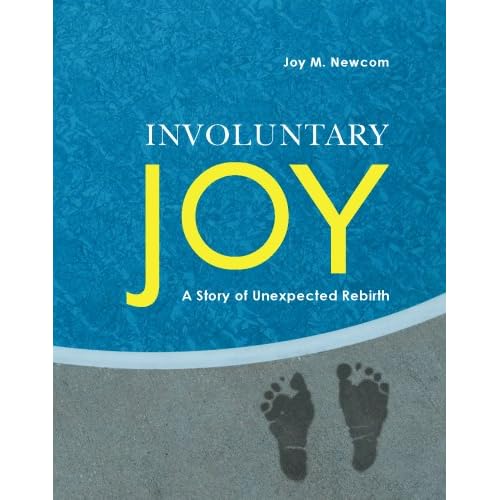
One of the relationships in my life that has found a way to stretch over the miles and years is with my friends Joy and Mark, who live in Iowa and both teach at Waldorf College. Joy is also a writer. Their first son was born with multiple birth defects; he is now sixteen. She wrote a book about their lives so far called Involuntary Joy. This week, in response to my Playgrounds & Pain post, she sent a wonderful email message, part of which said:

I've just returned from a small book signing. A few women--who have already read Involuntary Joy--shared comments that will be helpful as I attempt to move forward with finding an agent/national publisher. Everyday I see my son's joy over things that I might miss if he had not taught me how to look. I've explained that reality the best way I know how: Involuntary Joy. However, asking others to share the journey through reading makes for a bold invitation. The ones who accept are rewarded from the ride that is that portion of our life's journey. But I'm finding that some start to read and nearly quit because our life's pain is too much. (The ones who've talked to me have not quit reading, but admit they almost did.) One woman--who said she loved the book--suggested that it might be necessary to not tell everything in order to find other readers. I'm extremely open to such. In fact, would welcome the opportunity to have someone attempt to define what parts of our lives aren't necessary to share. But I have this lingering wonder: What kind of journey would they be taking with our family then? Can the rewards of a less intensely painful read be as great? Would the concept of life's involuntary joys become as fully known?
Her questions sent me first to Mary Oliver’s wonderful poem, “Wild Geese”:
You do not have to be good.
You do not have to walk on your knees

For a hundred miles through the desert, repenting.

You only have to let the soft animal of your body

love what it loves.

Tell me about your despair, yours, and I will tell you mine.

Meanwhile the world goes on.

Meanwhile the sun and the clear pebbles of the rain

are moving across the landscapes,

over the prairies and the deep trees,

the mountains and the rivers.

Meanwhile the wild geese, high in the clean blue air,

are heading home again.

Whoever you are, no matter how lonely,

the world offers itself to your imagination,

calls to you like the wild geese, harsh and exciting --

over and over announcing your place

in the family of things.
Joy and Mary’s voices harmonize to remind me when we share our despair with one another we give birth to joy – and kindness. In a recent post, Jen Lemen, another scribbling woman* who speaks to me, wrote:
We float on the sea of otherness together, our differences folded into the kindness of not having to be alone–no matter how young your sorrow or how old your hope.
I know there are days I have written out of my loneliness, craving comments and community; at my best, however, I work to write in solidarity rather to feed my need to not feel by myself. I dig into the words as one among many who are mining our pain and circumstance hoping to strike the veins of joy and kindness that sustain us all. As I sit solitarily at my computer, I learn again (even as I change metaphors) that I am one voice in the great cloud of witnesses and participants in our shared humanity – even today I have quoted Joy, Mary and Jen. I close with the words of Bob Bennett’s song, “Hand of Kindness.”
I’ve no need to be reminded
of all my failures and my sins

I can write my own indictment

of who I am and who I’ve been

I know that grace by definition

is something I can never earn

but for all the things that I may have missed

there’s a lesson I believe that I have learned


there’s a hand of kindness
holding me, holding me

there’s a hand of kindness
holding me,
holding on to me

forgiveness comes in just a moment

sometimes the consequences last

and it’s hard to walk inside that mercy

when the present is so tied up to the past

in this crucible of cause and effect

I walk the wire without a net

and I wonder if I’ll ever fall too far

but that day has not happened yet


‘cause there’s a hand of kindness

holding me, holding me

there’s a hand of kindness

holding me, holding on to me
“There is no joy in eating alone,” it reads at the top of the sidebar on this blog. There is great joy and kindness in not having to be alone even as we eat and write and pray and grow and live holding on to one another.

Peace,
Milton

*with an ironic nod to Nathaniel Hawthorne who lashed out at "those damned scribbling women" whose books often outsold his.

Thursday, November 01, 2007

playgrounds and pain

When Ginger and I moved to Boston in August of 1990, we had been married four months. Now, five months shy of our eighteenth anniversary, we are (we verbalized as we drove into the city today) leaving home. We wondered aloud how we will learn to “let go” of this wonderful city and then began to talk in terms of “changing our grip”: we are headed south to find home in a new city and Boston will remain our hometown.

We are also leaving those who have become family to us. The main point of our trip today was to say goodbye to Cherry, whom we have known since she was in high school and we met her doing a youth camp in Louisiana. She moved to Boston and lived with us for four years and has remained to make a life of her own, part of which includes being a yoga instructor. We met for lunch at Fajitas & ‘Ritas, the site of my fortieth birthday party, and then spent a couple of hours sipping coffee and talking as we sat together on Boston Common across from a playground packed with little kids. I was taken with one little girl in a pink dress who, rather than coming down the slide, slung herself over the side of it at the top, dangled, and then dropped to the ground below. She jumped up, climbed back up the ladder, and did it over and over without hesitancy or harm.

Cherry talked about some of the bodywork she has done in her yoga training. “The reason she doesn’t hurt herself,” Cherry said, “is because she doesn’t resist.” The little girl fell without fear; she didn’t brace herself as though the ground would hurt, she just let go and landed. “We get injured when we brace ourselves in fear,” Cherry continued. “We have to learn to trust the joy.”

John Updike wrote a story called “Trust Me” (in a collection by the same name) many years ago that begins with Harold, as a child, jumping off the edge of the swimming pool to his father’s arms, only to be dropped into the water and moves through various events in his life in which his trust is betrayed or he breaks the trust of one of his loved ones. Then the story ends:

The palms of his hands, less mottled, looked pale and wrinkled, like uncomfortable pillows. In his shirt pocket Harold found tucked the dollar bill rejected at the subway turnstile, extremely long ago. While waiting for Priscilla to relent and call back, he turned to its back side, examined the mystical eye above the truncated pyramid, and read, over and over, the slogan printed above the ONE.
As we sat in the park, I couldn’t help but watch the children moving up and down the chutes and ladders. Their play was not without pain -- I saw them slip on steps and slam into the slides – but joy was the prevailing wind that filled their sails. They dove and jumped and climbed and slid head first without resistance, without fear, without thought that our afternoon was made for anything other than unadulterated joy. And we were three who have trusted each other for a long time struggling not to brace ourselves for the pain that comes with separation. While they played, we were saying goodbye. We were living a pain those children don’t know. They were living a joyous abandon we are hard pressed to find in our own lives. Who then, has the lesson to learn?

I couldn’t help but think of Randy Newman’s old song:
If I had one wish
One dream I knew would come true
I'd want to speak to all the people of the world
I'd get up there, I'd get up there on that platform
First I'd sing a song or two you know I would
Then I'll tell you what I'd do
I'd talk to the people and I'd say
"It's a rough rough world, it's a tough tough world
Well, you know
And things don't always, things don't always go the way we plan
But there's one thing, one thing we all have in common
And it's something everyone can understand
All over the world sing along

I just want you to hurt like I do
Honest I do, honest I do, honest I do"
Buddha taught that life was suffering. I, who at this point in my life am shaped a bit like Buddha, understand how much pain is a part of the fabric of our being and I wonder, after watching the children play today, why I allow myself to see pain as the fundamental connector of humanity so easily. We were created for more than enduring life. Hell, yes life hurts. It hurts a lot. It’s not safe or secure or without danger. And we were created for more than hiding in the corner or bracing ourselves for the next blow. As the goodbyes stack up as high as the boxes in our house, as we prepare to leave home, as our hearts hurt, I want to know how to swing out over the side of the slide and let go and continue to trust that love will catch me.

When I was in tenth grade, we came back from Africa to live in Fort Worth, Texas for a year while my parents were on leave from the mission field. I was carrying fresh wounds of farewells and had no idea how to be an American teenager. One afternoon, I was invited to a church youth event at a local park. Two of the seniors, Cathy Shelton and David Piland, who both seemed so beautiful and cool to me, sang Elton John’s “Love Song.” It was the first time I had heard of Elton or the song (actually written by Lesley Duncan). As they sang, the sounds of the children on the playground behind them bled through the microphone underneath their voices just like it does on the record (as I discovered when I bought it). The children giggled and shouted and played as Cathy and David sang:
Love is the opening door
Love is what we came here for
No one could offer you more
Do you know what I mean
Have your eyes really seen
Thirty-seven years later, the juxtaposition of playgrounds and pain still speaks to me, calling me beyond the hurt to informed hope. Whatever we know of sorrow and skinned knees, however marked we are by wounds and worries, they are not what makes us human. We were born by Love, we are bound by Love, and Love will carry us home.

Trust me.


Peace,
Milton

Tuesday, July 10, 2007

a boy named sous

I got the gig!

It’s no Holy Grail, but there was much rejoicing. Yay!

In between the opening and closing sessions of our Avalanche Ranch VBS, I drove down to Plymouth to talk to the Chef and came back with a job as his sous chef. I’m pumped. I call back tomorrow to find out my schedule. It is a salaried, full time position: five days a week, dinners only, and Wednesdays and Thursdays off. Along with Chef, my coworkers are from Greece, Pakistan, Italy, France, and Brazil. My place on the line will be the fish station to start and then I will rotate through to learn all the stations so I can run the kitchen when the Chef takes his days off.

Here are some of the things I will learn how to prepare:

Prince Edward Island mussels steamed with pinot grigio and Rayes lemon pepper mustard, slivered shallots, flat leaf parsley, and giant garlic crostini

Carpaccio duo of yellowfin tuna and Atlantic salmon with marinated artichoke hearts, saffron aioli, capers, red onion, extra virgin olive oil, and crostini

Pan roasted Atlantic salmon with baby gnocchi, Portobello mushrooms, spinach, and sweet vermouth Dijon cream

Jumbo shrimp and local sea scallops with snow peas, bell peppers, cilantro, and slivered scallions in a coconut curry broth, wasabi whipped potatoes

Pan seared Atlantic halibut with sweet corn, green bean and roasted mushroom succotash, wilted Swiss chard, and lemon chive butter sauce

Cilantro pesto encrusted yellowfin tuna with veggie sweet pepper, cucumber, and red onion salad, sticky rice, and citrus mirin dipping sauce
And that’s just the fish station. I think this is really going to be a good thing. To top it off, I got home to find a message from one of the other restaurants where I left a resume asking me to call. Now I get to call and say I’m already employed. I’m thrilled and grateful.

Thanks for your prayers and encouragement.

When I got back to Vacation Bible Camp (our kids don’t like to call it “school”), I was just in time to do my thing as song leader. I’ve got this goofy cowboy hat and I get up in front of the kids and we sing and dance together, if by dancing you mean thrash around in joyous abandon. One year, a kid went home and was practicing the song he had learned when his dad asked him what he was doing.

“I’m dancing,” he said.
“That’s not dancing,” his dad answered.
“It’s how Milty does it,” the kid replied with confidence.

This year’s theme, Avalanche Ranch: A Wild Ride Through God’s Word, chooses different stories to focus on different aspects of God’s nature. Today’s was “God is with us all the time” and the story was Joshua telling the Israelites to stack up the stones for an altar after they had crossed the river, my touchstone from a couple of nights ago. We whooped and hollered and sang:
you better hold on tight
‘cause it’s a wild ride
Then, of course, we danced – my way. I love that we are teaching our children that we belong to an untamed God who is full of as many surprises as promises. In one of my other favorite theological movies, Three Amigos, they jump on their horses after thinking they saved the town, and Steve Martin says, “We ride,” and they tear off across the desert. In the next scene they are in the middle of nowhere and Martin Short asks:
“How far do you think we rode before we stopped and asked for directions?”
“Oh, just three or four miles,” Martin replies.
“Faith,” says Frederick Buechner, “is a journey without maps.” One day the Israelites are one side of the river and the next they have crossed over without getting their feet wet. One day I the function chef and the next I get fired by a crazy owner only to find get hired, not too many days later, by a good guy I don’t even know because I saw his restaurant across the parking lot from the Unemployment Office.

As long as I’m referencing movies, we went to see Evan Almighty the other night. It’s a variation on the Noah story. At one point, God is talking to Evan’s wife who doesn’t understand why her husband is doing what he’s doing. God says, “When someone prays for courage, do I give them courage, or do I offer them the opportunity to be courageous?” For all my uncertainty and even insecurity, I’ve been given an opportunity to do what I most want to do in what appears to be a healthy restaurant environment. About all that’s left for me to do is walk in on my first day and say,

“My name is Sous*. How do you do?”

Peace,
Milton

*with apologies to Johnny Cash.

Wednesday, May 02, 2007

I am a cook

I don’t like eating alone, but cooking alone is another story – particularly on a day like today.

The owner came back from across the sea last night and a storm is already brewing at the Inn. He spent most of the day wandering around with a scowl on his face. Chef and the other cooks in the restaurant were in moods that covered the gamut from anxious to surly. I was in the function kitchen by myself, listening to NPR and making hors d’oeuvres for the wedding this weekend. I was the only one working in a decent climate.

After I was laid off back in January and then rehired, I did some real soul searching before going back. I needed the work (and the paycheck) and I liked it, but I didn’t want to feel owned. I also had to come to terms with the fact that part of the equation was mine: I chose to work in a place owned by a person who thrived on chaos and who did not share many of my values. After I survived the layoff, I realized pretty much all he could do to me was fire me -- nothing else -- and I could survive that. I also realized I’m at his mercy when it comes to my employment. So I go to work understanding I could come home without a job as easily as I could come home still employed and, somehow, coming to terms with it in this manner has helped me relax and cook.

Today marked the first day he’s been back since the layoff. I did my thing and enjoyed myself, but when I got home tonight I was exhausted. I’m trying hard to stay awake enough to write coherently. The uncertainty that has been mostly hypothetical is now tangible and it makes me sleepy (my preferred means of escape).

Both growing up in a minister’s family and starting off my employable years in ministry, I didn’t learn how to differentiate between who I am and what I do until much later along the way.

When we moved to Boston in 1990, I got a job at the local Blockbuster in Charlestown because we needed money. The store was in walking distance and I liked movies, so I took the job. One night, I was straightening shelves when I noticed a woman looking for a movie and I asked if she needed assistance.

“Oh,” she said, “I don’t usually talk to the help in these places.”

Her comment sent me into an identity crisis. I’d never had to think about where I stopped and the job started when I was in church work, but how could I BE the guy who rented copies of Terminator 2? My time at the video store gave me room to learn who I am and what I do are not the same things. I think I’ve told that story somewhere along the way on this blog, but it came back to me today in a new way because I am a cook – to the very core of my being. In the worst throes of my depression, I can find respite when I’m cooking.

I’m also a chef for a living, yet it’s not exactly the same thing. I still find joy when I’m cooking at the Inn, but when I leave work and come home I find more joy cooking dinner for Ginger. Cooking feeds my soul; I’m grateful it also helps to pay the bills. I’m also grateful that my job is only a segment of what cooking means to me. I love how much I’ve been able to learn at the Inn and for the people I work with. I’ve gotten better at what I do because of my days there. If the rumor mill proves true and he does let us go, I’ll still be a cook. If the rumors prove false and I get to keep doing the functions this summer, I’ll still be a cook.

Who I am is not determined by what he does.

Peace,
Milton

Sunday, March 25, 2007

lenten journal: the do of milton

Church started with a smile for me today.

After our call to worship, opening hymn, and prayer of confession, someone reads the Psalm of the Day, which today was Psalm 133:

Behold, how good and pleasant it is
when brothers dwell in unity!

It is like the precious oil on the head,
running down on the beard,

on the beard of Aaron,
running down on the collar of his robes!

It is like the dew of Hermon,
which falls on the mountains of Zion!

For there the LORD has commanded
the blessing, life forevermore.
I was listening, not reading, and was very taken with the image of the oil running down off the top of Aaron’s head. It sounds like they emptied the whole bottle on his head, leaving it to run down the sides, perhaps filling up his ears, and (at least in my imagination) down his face until it seeped out of his beard, all of it ending up dripping down on his collar and probably ruining his robe. Though I’m not particularly an oil and lotion person, the image was moving to me. Then came the next line.

What I heard was, “It is like the Do of Herman.”

There is the Tao of Pooh – now there’s the Do of Herman, I thought. Next I wondered who Herman was and what exactly he did to make his “do” so important. The contrast between Aaron sitting and letting the oil roll down over him in quiet abandon to the moment and Herman only being known for what he did also jumped out at me. Wherever Herman is, I hope he’s finally been able to quit doing for today and can get some rest.

The Do of Milton knocked out my usual and always enjoyable Sunday afternoon nap because I had to cook for a wedding at the Inn. Ginger and I ate lunch together and then went about our separate “dos.” I got to the Inn about one and dove into the list of things we needed to get ready. Alfonso and Pedro worked alongside of me most of the day. For someone who speaks a limited amount of English, Pedro has an amazing vocabulary when it comes to American popular music. He sings along and knows all the words, even though he doesn’t necessarily know what all the words mean. My favorite is hearing him sing along with Gnarls Barkley, “Does that make me crazy?”

While we were plating up the first course, Pedro looked at the others in our assembly line and said, “What’s wrong you people? No one smile. No good. Only Milton and me happy everyday.” I’m always happy to work with Master P.

No two ways about it, I’m a messy cook. Well, perhaps a better way to say it is I get messy when I cook. By the time the day is over, I’m wearing small pieces of everything I made like merit badges proclaiming my accomplishments. Some marks are more permanent than others, leading me to change from white chef coats to black ones a couple of weeks ago in the spirit of the eternal question, “How do you tell when a brown towel is clean?” Most of my merit badges became invisible on my new dark uniform and, according to Pedro, the black is quite slimming as well.

For both the weddings this weekend, I had to make pizza to serve at the end of the night when the couple’s closest circle of friends remained to finish out the evening, which meant I had to flour the stainless steel table to roll out the pizza dough, which also means I did a good job of flouring myself in my new black coat. Regardless of my fashion sense or color scheme, I’m going to get messy when I cook. Messy is part of the deal.

Ginger preached on Mary’s anointing of Jesus’ feet with perfume and then wiping them with her hair, an act that was both beautiful and messy. Jesus’ feet may have been clean, but I assume Mary must have had to wash her hair the same way Aaron had to shampoo to get all that oil out. She did a wonderful, extravagant, messy thing – the stuff real relationships are built on. As Ginger said, “Intimacy is messy.”

She also opened her sermon recounting an experience we had in Israel several years ago that bears repeating.

We spent about ten days in Israel and Palestine with a tour group of Christians mostly from mainline denominations, going to a number of sites of interest to our faith. As our tour guide often told us, most all of the sites had churches built over them and many of the sites were not the actual places where the events took place, but the “traditional” site, which I took to mean the place where it was most convenient to build a church.

When we stopped at the Jordan River to see where Jesus was baptized, the spot was not exact and was not covered over by a chapel. There were some seats and some changing rooms and a small concrete walkway down to the water’s edge that made it easy to kneel and touch the water, or, as we had planned, to be baptized. Our little band gathered around and read scripture together and then we very quietly and reverently came forward in single file for Ginger and Skip, the two ministers leading the trip, to mark our foreheads with water.

Shortly after we began our time of worship, another bus pulled up that was carrying a Pentecostal church group from somewhere in South America. From the place where the buses parked to the water was about fifty feet of gentle slope leading to the river. The group got off the bus singing hymns and clapping. Their pastor was wearing his robe and was leading the group. About three or four steps from the bus, he broke into what Ginger referred to as “a middle aged sprint” for the river and, without breaking stride, left his feet when he reached the concrete walk and leapt spread eagle into the river, gloriously belly-flopping and sending quite a wake our way. His congregation was not far behind, running and jumping into the water, and then they clapped and sang and splashed in the water like kids at bath time. They didn’t think about getting back on the bus in wet clothes or what was coming up next. They were in the water with Jesus and they weren’t going to hold back a thing.

Get wet. Get messy. Dive in. Have fun. Crack open the perfume and stink up the place.

Seemingly unusual messages for Lent, perhaps, but I think not. Does that make me crazy?

Peace,
Milton

Saturday, February 24, 2007

lenten journal: shield the joyous

My day started with a bowl of Cheerios, a cup of coffee, and this prayer of Saint Augustine, which is part of the Compline in the Book of Common Prayer and found in Nora Gallagher’s book:

Keep watch dear Lord with those who work, or watch, or weep this night, and give your angels charge over those who sleep. Tend the sick, Lord Christ; give rest to the weary, bless the dying, soothe the suffering, pity the afflicted, shield the joyous; and all for your love’s sake.
She records her brother’s response:
Shield the joyous. I like that. When you are joyful, you need a shield.
I read the prayer to Ginger as she was getting ready for work and she repeated the phrase thoughtfully: “Shield the joyous.”

I’m a big fan of verbs. They’re the best card we have to play in English. When I studied Greek in seminary, I learned that language was driven by nouns, which could be packaged in several different cases. Not English. We rely on action – and the verb is the action word – so much so that we try to turn our nouns into verbs. My new pet peeve is people saying they “were gifted” something. No. We already have a verb for that: they were given a gift. All of that to say I went back to the prayer to look at the verbs.
  • tend the sick
  • give rest to the weary
  • bless the dying
  • soothe the suffering
  • pity the afflicted
  • shield the joyous
The five verbs that precede shield feel like the natural partners for the needs to be met. What we can do best for those who are sick is tend to them – take care of them. The answer to weariness is rest. Bless is packed full of forgiveness and compassion for those who are coming to the end of their days. Certainly those who are suffering need words and actions that lessen the pain. In Augustine’s day, pity was not about feeling sorry for someone but was also a word of compassionate action. All the recipients are vulnerable and fragile. In Augustine’s mind, so were the joyous. They needed to be shielded.

Joy is fragile.

I’ve never really thought about it that way, which makes me feel kind of stupid because the more I think about it the more obvious it seems. It’s fragile because it’s fleeting. Whatever the moment or the experience, there’s another moment quick on it’s heels. Perhaps that was part of Jesus’ point on the mountain after the Transfiguration when Peter wanted to build a small hotel and stay up there, caught in a moment of joy. “Wrong,” said Jesus in so many words. “We’ve got to go back.” When the returned to the others, everyone was in such a frenzy that no one asked what had happened. I realize there’s room to talk about joy as something at the core of our beings, thanks to God’s presence, but when we experience joy it’s at the thin places of life when it rises to the surface. Those don’t last long.

Joy is fragile because it’s unfamiliar. I work with a lot of really good people who I think don’t expect joy in their lives. They know about the pursuit of happiness and love to have a good time, but as I watch some of them they seem to have allowed themselves to choose to believe that this is the way life is: you go to work, you party when you can, and you live with a lot of shit. Some of them have good reason to think that’s the way life works, based on what they’ve been through. It makes me sad and it makes me understand the prayer better. If I could give any of them a chance to expect joy in their lives, I would want them to be shielded long enough to know it was real.

It’s also fragile because it’s so basic. In the Periodic Table of Life, it is an essential element, just like suffering. Though I make no claim to being any sort of scientist, I’m going to take my shot at a chemical analogy. I think I remember (from some chemistry class long ago) that some elements are not stable enough to hold together when they hit the air. They have to be protected, shielded, if you will. (And I know you will.) So it takes a lot of work to figure out how to make use of the substance because you have to live with the fact that it’s probably going to fall apart.

I don’t mean to sound as pessimistic as that last sentence felt when I reread it. Joy is essential to the fabric of our humanity and it isn’t stable when it hits the air. (I think I’ll move on.)

Though I read his prayer over breakfast, Augustine was praying at the close of the day, which is when I’m writing. He prays for those who have to work the night shift, or are keeping watch, or whose grief has taken away any chance of sleep, and then he moves to his list of vulnerable ones: sick, weary, dying, suffering, afflicted, joyous. As much as anything, he seems to me to be praying that we could all get a good night’s rest from the circumstances of the day. As Hedwyg quotes Madeleine L’Engle, “The problem with life is that it’s so damn daily.”

And we are so damn human.

The house is quiet now. All three of my girls did their best to stay awake until I got home from a very long day at work. Our friend Jay is spending the night, so Lola is keeping him company on the couch instead of being tucked in with Ginger and Gracie upstairs, as she always does when he stays with us. The night will be a short respite for us all because tomorrow already feels as though it is rushing to get here. As I think about Augustine’s prayer, I can name at least one person I know that fits each definition, so I will close by writing it one more time:

Keep watch dear Lord with those who work, or watch, or weep this night, and give your angels charge over those who sleep. Tend the sick, Lord Christ; give rest to the weary, bless the dying, soothe the suffering, pity the afflicted, shield the joyous; and all for your love’s sake.

Peace,
Milton