Showing posts with label hope. Show all posts

Friday, June 29, 2012

milty, can you hear me?

A couple of years ago, I started noticing changes in my hearing. When it came time for my yearly physical exam, I asked my doctor about sending me to an ENT and also to an allergist, since I have yet to find a season to which I am not allergic in North Carolina. His nurse practitioner said she would make the appointments. That never happened. Midway through the next year, my allergies got so bad that I had trouble swallowing at times -- lots of times -- so when I went back to the doctor I made the same request a bit more emphatically and ended up with two appointments, or should I say dis-appointments. First, neither of them knew I was coming. Second, the ENT was efficient to the point of not dealing with my problem. At the very end of the time I asked about the hearing test and she said, “Sure,” and shuffled me off to a room with headphones and when the fifteen minute test was over they started talking to me about spending $4000 on hearing aids.

I said I would get back to them.

The point of going to see the allergist, at least as I understood it, was to get tested so I could understand more of what was going on and to find out why I was having such trouble swallowing. He, too, had no idea I was coming. He didn’t do the testing, other than to scratch a couple of times and tell me I was allergic to dust mites. Then he started talking about coming for allergy shots, which provided him a steady income but didn’t offer me much of a solution. I asked about my throat and he said he didn’t have the equipment to look at it and that it didn’t have anything to do with allergies. When I asked why red lines showed up on my skin when he scratched me he said, “You’re very allergic.” He didn’t seem concerned about what I was allergic to, but he did write me a prescription and offered to see me again.

I turned down the latter offer, started taking the pills and my throat loosened up.

Last week I went back to my doctor for my physical and he asked how the referrals had gone. No one had told him. I recounted my stories and said, “I guess I was mistaken to think that when you  used the verb ‘refer’ that meant you would actually talk to each other.”

He smiled sheepishly and said, “That’s the way it’s supposed to work.”

I then went on to say two years had passed and I still didn’t understand what was happening to my hearing. Since then, things have gotten worse. Higher frequencies are harder and harder for me to hear. When it gets quiet, I hear white noise that sounds like little bagpipes playing inside my head, and playing the way my father-in-law Reuben used to whistle: without any coherent melody. I needed someone that would pay attention. Someone that would act like I mattered more than my copayment. He then spoke of a doctor at Duke who is tops in her field and could help me find some answers. His nurse came in, picked up the phone, and made me an appointment. I wanted to ask why they had waited two years to play out the scene. I chose, instead, to say nothing and hope for a different experience.

This morning, I went to the Audiology Clinic at Duke. When the woman came in to do my hearing test, she asked me what was going on. I told my story and then said, “It may be that what I need are hearing aids. First, I need someone to listen to me.”

And she did.

What took fifteen minutes at the other clinic took an hour today. She did four or five different tests and then explained what she had found. I have greater than average hearing loss for my age. Hearing aids are probably what I need, but she wanted me to see the doctor first. She was also attentive and clear. I go back for follow ups next week.  The best part of today was I left feeling heard.

As the audiologist was explaining about hearing aids, she said, “You are actually at an easier age to learn how to use hearing aids because your brain can still recall what it feels like to hear.” Part of the reason for the bagpipes, it seems, is the brain makes noise to fill in the lost frequencies. When the sounds show up again, the brain has to remember what to do with them and it can be disconcerting, if not down right uncomfortable. “You will need to wear them all day everyday until your brain makes room for the sounds again. You’re going to hear better, but it’s going to be hard work.”

And it’s work I’m willing to do. If I don’t want to spend the rest of my life saying, “What?” or letting stuff go by, I will need to do the work to open my brain to sounds it has forgotten and to get over my vanity of having little battery packs behind my ears without any hair to hide them. I’m not going to be healed; I am going to be helped. That will have to be enough. I am motivated, in part, by the ears of the audiologist and the doctor who worked hard to listen today. How I wish they were not the exceptions in my experience in American health care.

Peace,
Milton

Monday, April 02, 2012

lenten journal: glitches and grace

We have made a quick trip to visit my parents—we being Rachel, Ginger, and me – and I say to visit my parents rather than going to Texas because we are spending the sixty-four hours we are here in the Lone Star State with them. The trip was not precipitated by an emergency. It had just been too long since we’ve been here. The trip is short because these were the days we had to get here. It is difficult to be here and not cast a wider net of friendship.

Our day started this morning about four when we got up to catch a flight that took us from Raleigh-Durham to Orlando to San Antonio to Dallas. Sunday morning, I dutifully set an alarm clock to get up at six so I could save a place in the boarding line. Our printer was ailing, so I just checked in, knowing I could pick up the passes at Southwest when we got to the airport. When the Skycap handed me the passes they were in the last boarding group. She knew nothing of my reservation. Once we got through security, I went to the customer service desk to get it straightened out. I told my story and the woman behind the counter answered, “I have no record of any activity on the account since you purchased the tickets.”

I bristled. “I feel like you’re calling me a liar,” I said and we both kind of squared off, though neither of us lost our composure or sense of tact. She was intractable, other than offering to get her supervisor. I took her up on it and told my story once more. I got the same response. It wasn’t any more helpful than the follow up question: “What would you like me to do?”

In the frustration of the moment, I couldn’t answer well. We got in line and got on the plane. Though I was hardly awake, I began writing to release the tension I was feeling. I made notes for a letter to Southwest customer service to let them know it was the first time I had ever had dealings with them where it left me feeling like they were no different from any other airline. I was disappointed, confused, and, well, put out. Then I wrote in my notes:

I would like to answer your question now. What I wanted you to do was admit your computer had made a mistake. I wanted you to ally with me, to help me feel like you were on my side rather than make it feel like it was my fault. Maybe you were too worried about liability so you spit back rehearsed corporate speak. Maybe someone tries to pull this stunt everyday and I’m naïve to think telling the truth is enough. But what I wanted was for you to be on my side.
I relaxed and fell asleep. I may have even dreamed about sending the email and getting a response. I will have to push myself to really send it because I am not the least bit hopeful when it comes to expecting big companies to act with any humanity, regardless of how they are viewed by the Supreme Court. I kept telling myself I needed to send it because that’s the only way things do get changed, but I get caught in a sort of quixotic resignation that expects little from going through such motions.

We were sitting at lunch in San Antonio when Rachel said she thought she heard our name called over the intercom. Ginger went to check it out at the gate and came back with a smile and a handful of papers. The gate agent told her the people at RDU kept trying to figure out what had happened after we left. They went back through their records and found the glitch that had not only messed up our check-in but had also charged us for the trip three times over, leaving us with bad boarding passes and a bunch of debt. They had gone through and cancelled the redundant charges, made sure the real reservation had not been cancelled in the process, and gotten everything ready for a refund. All I had to do was call Customer Service.

Which I did and they straightened it all out.

The obvious thing to say here is, “Thank you, Southwest” because they turned out to be different than the other guys and they did a great thing. Learning to be an ally on the front side of the issue still needs to be part of their education, and I am grateful for their tenacity. The more obvious thing to say to myself is remember to listen. I know how I felt this morning; I don’t know how the two women on the other side of the counter were. They both seemed defensive and terse. Who knows how much of that belonged to our interaction and how much to someone else. Since I managed to not lose my cool I also managed to be the beneficiary of their continued work on my behalf, even when they knew they would probably never see me again. They managed to make me hopeful when I saw little hope.

I am grateful.

Peace,
Milton

Thursday, March 29, 2012

lenten journal: a word for today

Spring Break began today for my school, along with many schools in our area. Usually it begins on Easter weekend, but this year they scheduled it earlier, which has thrown off my calendar a bit. The best news is I will get to play catch up a little in the garden tomorrow, or at least until the pollen pushes me back indoors. As Lent prepares to stretch out in the Last Long Week, I must admit to being caught a little off guard by the approach of Palm Sunday, even with writing everyday.

You would think I’d be ready.

The pace of life and my unpreparedness for What Is To Come makes me mindful of the gift we are given in being able to get ready: to prepare, to practice, to ponder. Easter has been on the calendar for a long time. We have scheduled the sacred into our lives, and scheduled around it. To be caught by surprise, even by what I know is coming, is a gift – a chance to catch a small glimpse of what it might have felt like the first time around.

A couple of nights ago, I sent a message to an acquaintance here in town whom I need to see for some advice on a project. I suggested we get together next Friday (as in next week) and he wrote back agreeing to meet, thinking I meant tomorrow. When I clarified, he wrote back to say his mother-in-law was dying and he needed to go with his wife to be with their family as they said goodbye, commenting that she was an only child so she was carrying the bulk of the burden. After walking through the past year with my father-in-law Reuben’s descent into Alzheimer’s and death, I understood in a very visceral way. I wrote back to tell him to take the time he needed and then “I will see you after the Resurrection.”

“Ahhh, yes,” he answered, “after the Resurrection . . .”

An old friend whose heart has been broken sent a message tonight asking for prayer to be able to face the silence of the night the lies ahead. Those are the two stories of pain that come to mind most quickly tonight; I know more. So do you. We are tired, we are weak, we are worn.

And we know whatever pain we know is not the last word.

Growing up Baptist, I didn’t know about Lent, or, I should say, I thought Lent was something Catholics did that meant that had to give up stuff. Thanks to a long list of teachers and fellow pilgrims, I learned to tell time liturgically, which has made my Resurrection mornings even more powerful because, I think, I learned to take the darkness more seriously. I’ve learned that the direction our faith takes us through pain and grief, not around them. And I’m reminded almost daily that we go through them together.

Tonight, that's enough.

Peace,
Milton

Friday, March 23, 2012

lenten journal: spice route

Last night as we were getting ready for the Cocoa Cinnamon tasting, Leon had a plastic bottle filled with sand from the Sahara he had brought home from time spent in Tunisia and Morocco. He poured some into a brass Turkish coffee pot and let us touch it. The sand was somehow fine and coarse at the same time and had a pinker hue than what I know as sand, bordering on rose. (Cue the Police: “Tea in the Sahara.”) At the same time, Areli was building little mounds of spices – cinnamon, cayenne, sea salt, hibiscus, curry, cacao nibs, raw cacao beans – for us to add to our Venezuelan drinking chocolate when they served it later in the evening. I sat the camera on the table at one end of board and took this picture. Here is where the picture took me.

spice route
something in the sand
shrinks me down to size
clothed in appropriate
insignificance I step into
the stories mounded up
in the spices on the board
in the middle of our table
standing in my dining room
I walk the stone streets
of Tunis and Marrakesh
surrounded by the laughter
and questions from the
caravan of friends and
adventurers sailing
around the room
tasting and talking
digesting dreams
inhaling hope
infusing our lives with
the trace minerals
of togetherness
Peace,
Milton

Saturday, March 17, 2012

lenten journal: reflection

there are days I lay awake
at night and wonder even
worry about what’s to come
because the future feels

like a past due account and
I have already spent my time
thinking about tomorrow
putting the tense in present

there are nights like this
when I fall asleep holding
on to the day like the last
bite of the meal we shared

where we passed our plates
like forgiveness and let
ourselves love and laugh
like the present were a gift

and we press our fingers
to get every last crumb
and thank God we were
made to be hungry

Peace,
Milton

Wednesday, March 14, 2012

lenten journal: onward, christian artists . . .

“Study the faces of the new tyrants,” Berger says has he begins the last section of his book, Bento's Sketchbook: How Does the Impulse to Draw Something Begin? What follows is a series of incisive descriptions:

They are impeccably dressed and their tailoring is reassuring, like the silhouette of high-security delivery vans.
They have foreheads with many horizontal creases. Not furrows ploughed by thought but rather lines of incessant passing information.
Small, swift eyes which examine everything and contemplate nothing. Ears extensive as a database, but incapable of listening.
They are familiar only with their own impressions of their own rackets. Hence their paranoia and, generated by the paranoia, their repeated energy. Their repeated article of faith is: There is no alternative. (147)
Not just tyrants, I thought as I read, he’s describing most of our politicians. And then I wrote in the margin, “This is antithetical to hope.” Faith as well. We were breathed into being by a God of endless possibilities, a God who has yet to quit slinging stars into the night sky, a God who inhabits the joy of laughing children and the smell of new puppies as fully as layered lavishness of a Texas sunset and the comforting power of the waves crashing on a New England shoreline. To say there is no alternative is not an article of faith but a declaration of vapid cynicism.

I listen to Santorum and his ilk define all there is to be afraid of, listing everything from presidents to birth control pills, as though the best working metaphor for the faithful is that of the warrior, the protector, the good soldier who holds the line against the raging enemy. Even though I know it’s not original on his part and I grew up singing “Onward, Christian soldiers, marching as to war,” I don’t want anything to do with it. To see oneself as a soldier means to live looking for the enemy, which means the energy gets spent on building walls and weapons. Those are not articles of faith.

“Love your enemies.” Quick – who said that?

We are not soldiers. We are artists, creatives made in the image of our Creator.
Drawing is anyway an exercise in orientation and as such may be accompanied with other processes of orientation which take place in nature.
When I’m drawing I feel a little closer to the way birds navigate when flying, or to hares finding shelter when pursued, or to fish knowing where to spawn, or trees finding a way to the light, or bees constructing their cells.
I’m aware of a distant, silent company. Almost as distant as the stars. Company nevertheless. Not because we are in the same universe, but because we are involved – each according to his own mode – in a comparable manner of searching. (150)
An exercise in orientation. What comes to mind first is an encounter I had in the parking lot of the Hard Rock Hotel in Las Vegas. Ginger and I were checking out of the hotel and I was carrying bags out to the car about nine in the morning. The two men in front of me were still living the night before. Both were in cut off jeans and Hawaiian shirts.

“Well, I’ll tell you one thing,” said the first with great emphasis and volume, “there’s two things you’ve got to know in life: where you’re at and where you’re going.”

“Well, hell,” said the other, “I always know where I’m at, but I ain’t never knowed where I was going.”

I want to sing a new song: “Onward, Christian artists . . .” Forget about marching, about defending, about protecting. Create. Search. Remember. Remember we are not searching to discover God’s plan, we are searching for God. We are searching for every way we can find to connect with one another, to include one another, to love one another. The trees find their way to the light and we find our way together. We find our way to the God of Many Alternatives.
onward, christian artists
drawing close to God
searching for connection
the faithful and the flawed

fear’s fomenters crumble
while all creation sings
of our divine alternatives
as our hope takes wing

onward christian artists
drawing us to God
stars and saints are cheering
and the trees applaud
Peace,
Milton

Thursday, March 08, 2012

lenten journal: conversation

“The difference between
joy and despair,” she said,
“has little to do with
circumstances and
everything to do with
what you choose to see.”

“You’re making that up,”
he replied.

She took his face
between her hands
and stared into his eyes
as if they held galaxies.
“I love you,” she said,
“with all of my heart.”

And he believed her.

Peace,
Milton

Tuesday, March 06, 2012

lenten journal: what's new?

Twice, today, I got to feel like a teacher.

My school is understaffed, which means I teach a couple of courses out of my area. OK, out of the six classes I teach (out of six periods of the day), four of them are not English. My schedule, this term, looks like this:

Period One: English I and II
Period Two: European History
Period Three: Music Appreciation and Expression
Period Four: Government and Economics
Period Five: Financial Literacy
Period Six: English III
I will pause until the laughter over my teaching economics and financial literacy has had time to subside. I will also say it’s exhausting and I have to be intentional about letting my life and my job be about something other than feeling tired.

The music class is a euphemism. I have taught an eighth grade elective all year that began as media literacy and then changed to film studies last term. When we started talking about a music class, I offered to teach the history of rock and roll and the academic dean came up with the name. The class is my largest – ten kids – and my most energetic. We’ve had a good year so far and I’ve had a blast introducing them to songs, singers, and songwriters they didn’t know about. Last week we finished up their presentations on the British Invasion and then watched “A Hard Day’s Night” as we talked about the Beatles (we’re not done with them just yet); this week we moved on to Bob Dylan.

I wanted them to encounter the songs this time, where their work thus far has focused on personalities, so I went through Dylan’s catalog and tried to pick out songs that would match the kids. The ten I chose were:
Blowin' in the Wind
Chimes of Freedom
Don't Think Twice (It's Alright)
Gotta Serve Somebody
Hurricane
Knocking on Heaven's Door
Make You Feel My Love
Like a Rolling Stone
Mr. Tambourine Man
The Times They Are A-Changin'.
Their instructions are to listen to the song and read the words until they can begin to respond to it, look up what others have said and felt about it, find out who has covered it, and then write an essay about the song and create some sort of art project. I created a web page where they could find links to the song and the lyrics. The computer lab has never been as quiet as it was as they listened through their headphones and dug into their songs. At lunch, an hour or so later, one of the boys who is working with “Mr. Tambourine Man,” made a point to come by my room and say,

“Mr. B-C, this guy is a poetic genius.” I smiled and he continued. “He repeats lines, but he changes a word or two so it means something different. It’s really good.”

Bob Dylan was old before this kid was even born. His parents weren’t alive when “Mr. Tambourine Man” was first released and yet today the song was new – to him. Though the song is bumping up on being sixty years old, it was new in his ears:
hey, mister tambourine man play a song for me
I’m not sleepy and there is no place I’m going to . . .
I have a student who deals with mild autism and is very concrete. He is a diligent and bright young man who works his butt off in class. He loves the feeling of accomplishment that comes with completing an assignment and presents it to me with almost an air of formality: “Mr. B-C, may I give this to you now?” His class, which is actually during first period, had a vocabulary quiz. Since they finish at different paces, I gave them an assignment related to To Kill a Mockingbird, which we are reading right now, and it listed the characters and asked the students to describe the ways in which each one felt trapped and how they responded to that feeling. The final section asked the students to write about a time they felt trapped in their lives and describe what they did to handle it. During sixth period, when the boy has a study hall, he finished the work and brought it in to me with the usual ritual, “Mr. B-C, may I give this to you?” Then he paused and said, “I put a lot of emotion into that essay.”

“Thank you,” I said. “Thank you.”

There is nothing new under the sun, said the writer of Ecclesiastes. Yes, and life is filled with discoveries of stuff that’s new to us. I’ve read Mockingbird twenty times if I’ve read it once. I learned how to play “Mr. Tambourine Man” in 1970 and it’s far too easy for me to agree “the ancient empty street’s too dead for dreaming.” But it’s not about me. They don’t know what I know, which means it’s yet to be discovered. Scout is still dressed like a ham and Dylan can almost carry a tune. The coolest thing is, thanks to them, I get to see with new eyes as well. What a gift.
hey, mister tambourine man, play a song for me
in the jingle jangle morning I’ll come following you
Peace,
Milton

Friday, March 02, 2012

lenten journal: the question is . . .

My little school is imploding.

I have much the same feeling as I did when I worked in my first restaurant which was a small tea house owned by a woman who had always wanted to own a restaurant, so she found an empty space, took out a second mortgage, spent a lot of money, and lasted six months because she didn’t really know what she had gotten herself into. Though my school has been here six years, it is still trying to find its identity, which has proven to be quite illusive leaving us with predominant daily question of “How do we survive?” which is not a question that fosters growth and learning.

Our foxhole perspective sent me back to something I read in Art and Fear a few days ago.

It is an article of faith, among artists and scientists alike, that at some deep level their disciplines share a common ground. What science bears witness to experimentally, art has always known intuitively – that there is an innate rightness to the recurring forms in nature.
Science advances at the rate that technology provides tools of greater precision, while art advances at the pace that evolution provides minds with greater insight – a pace that is, for better or for worse, glacially slow. . . . [a]nd while a hundred civilizations have prospered (sometimes for centuries) without computers or windmills or even the wheel, none have survived even a few generations without art.
[I]n art as well as in science the answers you get depend upon the questions you ask. (104)
To give some context to the passage, the authors weren’t out to foster a divide between science and art as much as they were using the distinction to say some things about the way art tells the truth by contrasting with how science tells the truth. More about that in a bit. First, I want to go back to the statement in the last sentence: the answers you get depend on the questions you ask.

During one of my first units of Clinical Pastoral Education (CPE), where I worked as a hospital chaplain, I read an article that talked about how we could help our patients cope with what was going on by helping them to ask better questions. Those who faced difficult diagnoses, for instance, might find more hope in turning from “Why did God let this happen?” to “What will this mean for my life?” The first ends up in blaming or patronization; the second offers room for discovery and growth.

When I read the line about the quality of our questions, I made a note in the margin: what would Jesus ask?

My mind jumped back to the healing stories in the gospels. On the one hand, the disciples saw a blind man sitting at the gate and asked, “Who sinned that this man should be born blind?” On the other hand – and thank God for other hands – Jesus met the man at the pool who had been there for years and years waiting for his chance and asked, “Do you want to get well?”

The answers we get are only as good as our questions.

Instead of asking how we are going to survive or what else could go wrong, I keep asking for the grace to remember that the kids in the building need more from me than fear, bitterness, or resignation. They need me to act like this matters so they can do likewise. They need me to ask questions that call us together and help us figure out how to make meaning of these days, regardless of how much it feels like I’m teaching at Titanic High. I must, therefore, go back and pick up art as a metaphor for life and faith and then reread the following passage:
There is a moment for each artist in which particular truth can be found, and if it is not found then, it will never be. No one else will ever be in a position to write Hamlet. This is pretty good evidence that the meaning of the world is made and not found. Our understanding of the world changed when those words were written, and we can’t go back . . . any more than Shakespeare could. . . . The world thus altered becomes a different world, with our alterations being part of it. (106)
One of our teachers left this week because he got an offer that he was right to take. We had a goodbye party for him on Wednesday. He had been here for almost three years teaching in the middle school, so the eighth graders were only in sixth grade when he arrived. He asked a great deal of himself and the kids and he got great answers from all concerned. At the party, one eighth grade boy said, “You’re the greatest teacher I’ve ever had because you helped me learn to be myself.” That teacher changed the world for the boy and helped him make meaning of the cultural hell we call middle school, which ranks right up there with writing Hamlet.

In a school on its last legs, in a culture built on greed, in a political climate of rage and cynicism, in a world that is broken and hurt, what would Jesus ask?

What will I ask? And then, how will I answer?

Peace,
Milton

Wednesday, February 29, 2012

lenten journal: jesus in 3/4 time

One of the classes I’m teaching this semester is European History. How that came about is a story of its own that is still unfolding, but it’s also a story for another night. When they asked (and by asked I mean told) me I was teaching the class, I fashioned the course around twentieth century Europe and then backed up to the nineteenth century to get the kids to take a look at some of the antecedents to what happened in the last millennium. And then, as a good student of my favorite professor Wallace Daniel, I set out to do more with history than give an account of who beat whom in what war. I divided the class into Team Literature, Team Art, and Team Music and set them searching for the thoughts and themes and feelings that defined Europe in the 1800s. They gave their presentations today using a very cool web site called Prezi.com.

The music group began with a Brahms waltz and my mind and heart kept swirling around the room, one-two-three, one-two-three, while I did my best to pay attention. I love a good waltz in whatever form from classical to bluegrass to, well, you name it. Somehow the rhythm of the waltz feels like a heartbeat, like the rhythm of life. J. D. Souther has a song on an album from the Seventies called, “Jesus in 3/4 Time” that isn’t his greatest song (though I love the line, “Blessed assurance is one thing to know and another to sing in a song”), but he’s on to something. One-two-three, one-two-three carries a symphony of emotion in its simple count somehow; grief and joy dance together, as do melancholy and hope. Here are a few of my favorites:

“Waltzing for Dreamers” – Richard Thompson

one step for aching
two steps for breaking
waltzings for dreamers
and losers in love
“Last Chance Waltz” – David Wilcox (this guy does a pretty good cover)
won't you please waltz me free?
the turns of our steps are untangling me,
free from some dragged around memory
and the rusty old remnants of fear
after ten years I’m melting the shackles with tears
“The Waltzing Fool” – Lyle Lovett
but the waltzing fool
he's got lights in his fingers
the waltzing fool
he just don't never say
the waltzing fool
he keeps his hands in his pockets
and waltzes the evening away
I’m not enough of a dancer or a musician to talk coherently about what is happening to both our hearing and our hearts when we move to three beats a measure, but sat in the room as the music swirled around the students even as it set my memories to moving, one-two-three, one-two-three. When the psalmist said that God would turn his mourning into dancing, he must have had a waltz in mind because it is a dance that grief can do. It is the rhythm of life, the rhythm of Lent, the rhythm of what it means to be together, perhaps (is this too much of a stretch) the rhythm of the Trinity:
one-two-three, one-two-three.
Peace,
Milton

Thursday, February 23, 2012

lenten journal: I love to tell the story

One of the things I love about the ecclesiastical calendar is it tells time by telling a story. Our story. The Story. We begin at Advent by preparing for Jesus’ birth and then move through the following weeks and months as the Incarnation unfolds and we see Jesus with people as he walks with them and talks with them, and tries to tell them about his death and resurrection. To number our days with the language of Epiphany and Pentecost, rather than January and May, is to not only tell the story but to become a part of it. I was thinking along these lines as I read again from John Berger’s wonderful new book (which has been inspiring me all winter):

When we are impressed and moved by a story, it engenders something that becomes, or may become, an essential part of us, and this part, whether it be small or extensive, is, as it were, the story’s descendent or offspring.
What I’m trying to define is more idiosyncratic and personal than a mere cultural inheritance; it is as if the bloodstream of the read story joins the bloodstream of one’s own story. It contributes to our becoming what we become and will continue to become. (84)
Katherine Hankey must have understood what Berger is talking about (though he hadn’t written it in 1866) when she wrote one of my favorite hymns:
I love to tell the story for those who know it best
seem hungering and thirsting to hear it like the rest.
In the chapter of Berger I reread yesterday, Berger told of going into a suburban Paris library to check out a copy of The Brothers Karamazov to reread. Both of the library’s copies were checked out and he began to wonder,
. . . who’s reading The Brothers Karamazov here today. Do the two of them know each other? Unlikely. Are they both reading the book for the first time? Or has one of them read it and, like myself, wants to reread it?


Then I find myself asking an odd question: if either of those readers and myself passed one another – in the suburban market on Sunday, coming out of the metro, or on a pedestrian crossing, buying bread – might we perhaps exchange glances that we’d both find slightly puzzling? Might we, without recognizing it, recognize one another? (83-84)
I can remember days in the subway in Boston looking across to see the cover of a book I had read and loved and then exchanging the kind of glance Berger describes, sometimes even a word of solidarity. One of the joys of teaching is initiating students into the coteries that know Scout and Gatsby and Mary Shelley’s misunderstood creature. There is a strong connection between Those Who Know The Story and a profound sense of joy at getting to be the one who makes the introduction. Expand the definition of stories and we can include the giant families, if you will, bonded together by Monty Python and the Holy Grail or The Princess Bride who willing share looks and laughs and movie lines.
Anybody want a peanut?
One of my favorite books to read with students is Frankenstein. Many years ago when I was teaching at Charlestown High, a Latina student who understood all too well what it meant to feel outcast and misunderstood became particularly attached to the Creature. Reading didn’t come easily for her, but she devoured the book. The morning we were to finish the book she came by my room early. She was visibly troubled.

“Mister B-C,” she said with sadness in her voice, “the Monster died!”

She didn’t need me to explain or even to comfort; she just needed to tell the story to someone who knew what she was talking about, that could share the experience, that knew it mattered to grieve a character who had lived so vividly among us.

As Lent begins, the story we love takes an ominous turn. Not so many weeks ago we were singing of herald angels and following stars. Yet, as we get closer to Spring, the shadows grow longer and the darkness more profound. We know where the whole story is going and these are not the easy chapters. Still, we are at our best when we tell the story in all its darkness and struggle. It is our story, as Berger said. It’s in our DNA. We tell the story, and we live the story, as we seek to incarnate God’s love in a harsh and beautiful world. Because we know the story passed down to us and we know the story unfolding in our lives, we understand what makes a great story, which is to say we understand a great story takes the darkness as seriously as the light. As David Wilcox sings,
look, if someone wrote a play
just to glorify what’s stronger than hate
would they not arrange the stage
to look as though the hero came too late
it’s almost in defeat
it’s looking like the evil side will win
and on the edge of every seat
from the moment that the whole thing begins
it is love that mixed the mortar
and it’s love that stacked these stones
and it’s love that sets the stage here
though it looks like we’re alone
In the last line of his chapter on stories, Berger said:
Hope today is a contraband passed from hand to hand and from story to story. (87)
I love that sentence. Telling the story – our story – is an act of solidarity, of subversion, of community, of compassion, of revolution. Of hope. The light shines in the darkness and the darkness cannot put it out, neither can the cynicism shout it down.

Gather in close and listen.


Peace,
Milton

Monday, January 30, 2012

inconsequential

How to live with the adjective inconsequential?
That’s the way John Berger posed the question as I sat with his book a couple of days ago in the coffee shop waiting for time to start my after school job. He was talking about the role of the artist and writer in the face of the violence which has dominated our world for centuries. What good does it do to write poetry and sing songs and make whatever art we can to wage peace and speak truth to power when the someday when we shall overcome never gets any closer on the calendar?
So one asks oneself: Do words count? And there must sometimes come back a reply like this: Words here are like stones put into pockets of roped prisoners before they are thrown into a river. (79)
The news talked this morning about a couple of cities, including nearby Charlotte, where the last of the Occupy campers were being evicted by police. The tone of the newscasters came across as one of the now-we-can-be-done-with-that variety. The criticism has been that the folks who lived in our parks for so long weren’t focused enough and didn’t know what they were protesting for, but I think that criticism misses the point. As Berger continues,
One protests because not to protest would be too humiliating, too diminishing, too deadly. One protests in order to save the present moment, whatever the future holds. To protest is to refuse being reduced to a zero and to an enforced silence. Therefore, at the very moment a protest is made, if it is made, there is a small victory. (79)
Though I was miles away from any of the camps, I was encouraged by those who took to the streets and the parks because they reminded me to not give into my cynicism. I have allowed the political process in this country to reduce me to feeling like a zero. I have let myself believe that the lobbyists have had the last word by buying off our alleged leaders leaving me, well, inconsequential.

And I’m not sure I’m wrong. The truth is the One Percent have most of the money and the power and they continue to tilt the game their way. The truth is, as John Stewart commented the other night on The Daily Show, “the poor have shitty lobbyists.” The truth is the candidates will spend enough money on their campaigns to fully fund Head Start programs across the country but will instead waste the cash on the political equivalent of a playground fight. Yet, the protestors in the park call me to a different view, as does John Berger. They call me to ask a better question:
How to live with the adjective inconsequential?
The adjective is temporal. Perhaps a possible and adequate response is spatial? To go closer and closer to what is being redeemed from the present within the hearts of those who refuse the present’s logic. A storyteller can sometimes do this.
The refusal of the protesters then becomes the feral cry, the rage, the humour, the illumination of the women, men, and children in a story. Narrative is another way of making a moment indelible, for stories when heard stop the unilinear flow of time and render the adjective inconsequential meaningless. (80)
As I hear the feral cry of the Occupy-ers, I wonder where are the feral Faithful? The voices crying in the wildnerness, “Prepare ye, the way of the Lord”? For those who have been called to proclaim liberty to the captives, we have been far too silent. Or, at least, I have.

Last week, I had the honor of going with Ginger to the annual meeting of Durham Congregations In Action where Ginger was installed as president for the coming year. DCIA is a strong voice of protest and promise in Durham and I’m proud of both Ginger and the group. The keynote speaker was William Barber, president of the North Carolina NAACP, another essential voice of faithful protest and hope in our state. He spoke with the power and poetry of a prophet, and asked a good question of his own:
Do you know who you are?
At the close of the service, Ginger was called to offer the benediction. She asked us to turn and face each other from either side of the hall and then each side took turns asking the other, “Do you know who you are?” with as much attitude as we could muster. We volleyed the question back and forth four or five times, the emphasis changing as we spoke:
Do you KNOW who you are?
Do YOU know who you are?
Do you know who YOU are?
I know who I want to be. I know, most days, what story I want to write with my life and I far too often let myself forget and fall prey to feeling inconsequential. I know it is far easier to define myself as not being one of those whose actions I hold in contempt than it is to define myself and tell my story. Jesus knew what he was doing in calling us to love our enemies because that love takes away any chance of using them as fuel for our arrogance and righteous indignation. The real story is there is no Us and Them, only Us. In that context, do I know who I am?

To you Occupy-ers, I’m sorry I am late to the game as far as speaking up and offering an encouraging word. You are speaking truth to power because you are telling a story: your story, our story. Perhaps parable would be a better word because, like the ones Jesus told, the point is not that easy to figure out yet there’s something in there worth digging for. What you are doing reminds me of words that matter from one of my favorite stories, King Lear:
The weight of this sad time we must obey;
Speak what we feel, not what we ought to say. (V,iii,322-323)
Words count. Actions matters. Faith works.

Peace,
Milton

Tuesday, January 17, 2012

an earring of hope

Today is Steve Earle’s birthday.

I’ve been listening to his songs all day, which is not so different from many other days, just more purposed. I love both his music and his story: he is a living testament to hope and redemption. One of my favorite tunes is “Some Dreams,” which was used as the theme song for The Rookie and embodies his tenacity and determination.


The chorus says, simply

some dreams
they never come true
yeah, but some dreams do
As a recovering addict, he knows of what he speaks. As I listened to it this week, the two middle lines were the ones that hung with me: some dreams never come true. Life, often, doesn’t go the way we plan or even hope for. There are dreams we can taste and see, things we know how to bring into being if things were to fall a certain way and those things don’t fall. We have worthy ideas and good plans and, still, some dreams . . . .

I know. Aren’t you glad you read this far?

Please keep going, because I did. As I kept singing the song, something hit me in a way that it had not before – and I can express it best in a paraphrase of the same chorus:
some dreams
they never come true
yeah, but someone’s do . . . .
On the heels of MLK Day and the countless repetitions of his “I Have a Dream” speech (which never gets old), I am aware in ways I was not before that dreams come to life – and death – in community. Whatever a dream becomes is born out of togetherness. AS long as I’m paraphrasing, there is no “I” in d-r-e-a-m. (Now you will quit reading.) Dreams have a chance to come true when community congeals around them; when mine don’t, I then have the chance to find meaning and healing in a dream that belongs to someone else in this shared adventure we call life together. I get to help your dreams come true or, perhaps, we will stand together in our magnificent defeats. That’s good news all on its own.

When I was in seminary, I pastured a small rural church in Central Texas populated, mostly, by farmers and ranchers, most all of whom planted some sort of hay each spring. When it came time, harvesting was a communal exercise. We all showed up at whoever’s farm ripened first and helped them cut, bail, and haul the hay into their barn. By the time we were finished, someone else’s field was ready. Over the course of a couple of weeks, we worked our way around four or five farms. My contribution was to bring out a couple of my large seminary friends who knew how to haul hay. We worked hard, ate well, took care of each other, and came away with some good stories to tell. Occasionally, a mistimed thunder storm would mean the hay that was cut but not yet bailed was going to be lost on one of the farms. Again, I saw the power of community as the ranchers took care of one another.

And they would all plant again the next year.

John Berger is a writer and artist who inspires me. I am in the middle of his latest work, Bento’s Sketchbook: How Does the Impulse to Draw Something Begin? is stretching both my mind and heart. In a chapter that has nothing to do with what I’m talking about here, he makes this statement, describing the work of another artist:
A sense of belonging to what-has-been and to the yet-to-come is what distinguishes [us] from the other animals. Yet to face History is to face the tragic. Which is why many prefer to look away. To decide to engage oneself in History requires, even when the decision is a desperate one, hope. An earring of hope.
I smiled when I first read the last sentence. The two little silver rings that have lived in my left ear lobe for twelve or thirteen years found a new shine and significance in his words. These are days around here – and by here I am drawing a larger circle than our address – where pain and grief and loss feel as common as weather. Things we thought would happen will not. People we hoped would stay have gone. Here, in between the what-has-been and the yet-to-come, we are working hard to engage. Were it a matter of saying, “I must go on,” I’m not sure many would do so. But even as we face the tragedy that is life, we are also being offered invitations by those around us to remember we belong. Some of the invitations to dream beyond ourselves are as small as trusting we can get to lunch or carry on a conversation. Others offer the chance to see dreams come true in everything from supporting midwives in Guatemala to opening an urban farm in East Durham to making music and writing books. And that’s just here in Durham. I don’t mean to make it sound as though the strings well up at sunset and everything is hunky dunky, and yet I do catch a glimpse of something in the midst of my melancholy, a flash of promise.

An earring of hope.

Peace,
Milton

Saturday, December 24, 2011

advent journal: fifty-six christmases

fifty six  christmases

and it matters more than
ever that Christ is born again
in the carols round the tree
in the sharing of meals
in the gift-wrapped bits of love
in the quiet streets of the city
in the empty chair at the table
in the ache of growing
and knowing too much
in the memories that hang
on the tree and in my heart
more than ever this year
I need Jesus to be born

Peace,
Milton

Tuesday, December 20, 2011

advent journal: penultimate

penultimate

on this tuesday night
we sat around the table
as though we had
all the night we wanted
to eat and drink and
laugh and talk and hope
we even had time for pie

tomorrow night
our prodigal planet
will wander as far
as it ever does from
the light of the sun
and then start back

what a gift that we can
live out a prophetic parable
with pork chops and pecan pie
leaning into the light
even as we head deeper
into the darkness


Peace,
Milton

Sunday, December 18, 2011

advent journal: nothing new to say

Two years ago today, my good friend David Gentiles died. Losing someone that close brought new feelings for me. Yesterday marked nine weeks since we buried my father-in-law, who was the first of our parents to die. The grief of these days is new to me, but as I sat in church this morning, for reasons I don’t know, it struck me that what is new to me is not new.

What has been is what will be,
and what has been done is what will be done,
and there is nothing new under the sun.
Is there a thing of which it is said,
"See, this is new"?
It has been already in the ages before us.
(Ecclesiastes 1:9-10)
If we’re talking about grief, it shows up early on just east of Eden when Cain killed his brother Abel. Whatever else we might find in that story, grief is front and center. Death and loss show up in the first chapter and have kept repeating their performances. From the beginning, we have had to learn without all the pieces of our hearts intact. Grief entered the story early, along with jealousy and anger, but so did grace and hope and redemption. Even God’s love is not new. It is, in fact, the very raw material of all creation, the very stuff that brought the universe into existence, long before humans came on the scene convinced that we were the most essential element and nothing of great significance – or, certainly, more significance – than ourselves had ever happened.

One of my favorite readings of the Creation Story was new to me when I was in seminary, though it dated back to Irenaeus in the second century. He felt Adam and Eve were created as children and God’s admonition to stay away from the Tree was to give them time to grow up. Their sin in eating the fruit was in growing up too fast and thinking they knew better than God.

There is nothing new under the sun.

As I think about what is new to me, whatever the feeling or experience might be, I realize we go through life much like the explorers before us “discovering” things that were already there. The only people who thought Columbus discovered America were those back in Spain who thought they were the center of their very limited universe. To people already on the “undiscovered” land had known about it for centuries. As I discover new experiences, new ages, and new feelings I am stumbling on to well-trodden paths as though I am the first to walk there. What I am feeling is not new. I am, instead, connecting with a memory older than time itself, offering me the chance to feel humility, resonance, wonder, and hope alongside of my grief.

Yesterday I waited on a man at the computer store who had his daughter with him. He held her the whole time we were talking. She had jet black hair that framed her young face and black eyes that glistened they were so dark. She smiled every time I looked at her. “Your daughter is lovely,” I said. “How old is she?”

“She has a birthday tomorrow,” he replied. “She will be two.”

She was born the day David died. As one heart as big as the world left the planet, this young one found it all new. I wonder as I wander . . . .

This afternoon, I found myself singing Joni Mitchell’s “The Circle Game,”which describes a boy growing up from a child to adulthood. The chorus sings:
and the seasons they go round and round
and the painted ponies go up and down
we're captive on the carousel of time
we can't return we can only look
behind from where we came
and go round and round and round
in the circle game
This morning, I finished my Advent stint as the prophet. After four seasons here in Durham, some of our children don’t know of Advent without me. As I turned to face them when I reached the back of the sanctuary as the congregation and I were finishing the song, I could see the three and four year olds singing, “Prepare ye the way of the Lord.” Circling round the seasons to do again what we have done before, to look for new eyes and new ears, to pray for Christ to be born again in our time and our culture is at the heart of what it means to be both hopeful and human. It’s not about looking for what is new but remembering what it true.

What is true is we were created with the capacity for wonder, with the ability to be caught by surprise by what has been there all along. We sat in the theater in High Point on Friday watching Scrooge be dragged about by the three ghosts until he came to the new realization that people mattered more than things. We all knew the old, old story, just as Dickens was writing down a tale that preceded him dressed in different clothes. And it was worth repeating.

I will keep repeating these days of loss and learn how much it matters to keep remembering and listening that I might discover more of who I am and who God is.

Here’s the good news : there is nothing new under the sun. Surprise!

Peace,
Milton

Thursday, December 15, 2011

advent journal: grieving

Again, with the technical difficulties. Here is my post from last night.

grieving
imagine you have a stone
the size of your sorrow
strapped to your back
imagine you and the stone
have fallen into a lake
and sunk to the bottom
you struggle to your feet
and try to carry the stone
back to the surface
but you cannot rise
the water is pressing in
you are almost out of air
you finally open your mouth
to concede your breath
as the water rushes in
yet you can still breathe
though your body feels
full and heavy, heavy
you are left to walk under
the weight of the water
unable to rise beyond
able to walk and to breathe
when you thought you
wouldn’t last the night
Peace,
Milton

Thursday, December 08, 2011

advent journal: mash-up

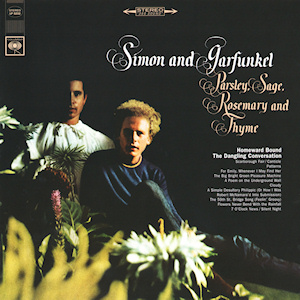
I am old enough to remember buying Simon and Garfunkel’s record Parsley, Sage, Rosemary, and Thyme when it came out in 1966. It’s the one that had (besides the title track) “Homeward Bound” and “The 59th Street Bridge Song” and a couple of lesser known ones that became favorites of mine: “For Emily, Wherever I May Find Her” and “Cloudy.” The last track on Side Two is what made me think of the record today. It was a mash-up, in today’s jargon, of “Silent Night” and a reading of the seven o’clock news.


While I was eating lunch in my classroom I got first word of the shootings at Virginia Tech. That news came along side of John Corzine’s testimony before Congress, Rick Perry’s latest craziness, stories of European struggles, the posturing at the climate conference in Durban, among other things and I remembered being a kid in Zambia in 1966 wondering how to make any sense of the world and finding resonance with those feelings today, forty-five years later. It would be simplistic of me, however, to say not much has changed. I posted a picture on Facebook of when I was a kid in Lusaka and a guy I grew up with there made a comment about it not three minutes after the photograph went live. The world is different than it was then, but the pain and perplexity of what it means to be human seems consistent all the way back to that first Silent Night and beyond. It feels worse now because we’re the ones living these days.

I know it’s nice to imagine the night of Jesus’ birth being calm and serene, with thoughtful and attentive folks gathered round, but the truth is Jesus was born in traffic, if you will, stuck in the barn of a sold out motel in what was, I’m sure, not Bethlehem’s finest street. There was a war going on then, just as his nation was being governed by men who were more concerned with self-promotion and self-preservation than they were effective and meaningful leadership. Most everyday of Jesus’ life could have used both carol and commentator as soundtrack for the creative tension from which he called people to choose love as the ultimate value.

Another song came to mind today because this is also the thirty first anniversary of John Lennon’s death. In 1971, he released “So This is Christmas (War is Over).”
and so this is Christmas
for weak and for strong
the rich and the poor ones
the world is so wrong
and so happy Christmas . . .
When that song came out, we were living in Fort Worth, Texas and I was a sophomore at Paschal High School, getting my first taste of what it was like to be an American teenager. I was pulled by the protests against the Vietnam War, even as I am pulled by the Occupy movement today. Though I knew war wasn’t just going to be over because we wanted it to, I also knew the subversive nature of a Love that would sneak into the world as a baby on a back street wasn’t going to run and hide when the pompous and the powerful started shooting up the place.

Simon and Garfunkel were on to something. Turn on the news while you’re listening to your Christmas carols. Pipe it into church while everyone is singing. Come face to face with all that is wrong with and in our world and then sing another verse. We are waiting for Christ to be born again in our time and in our culture because, no matter what the headlines, Love will outlast the lawyers, guns, and money.

Sleep in heavenly . . .

Peace,
Milton

Tuesday, November 29, 2011

advent journal: can't you read the signs

Yesterday morning marked the first time in several days that I had to answer my five o’clock alarm telling me it was time to get ready for school. Gracie, our middle Schnauzer, was grateful for the return to routine because it meant she got to eat earlier and it was a return to routine, which runs high on a Schnauzer’s list of priorities.

I realized as the shower washed my sleep away that I had disconnected from my daily life quite thoroughly over the Thanksgiving holiday. I had not looked at one paper in the bag I brought home with me and had instead spent the days filling the house with the aromatics of good food and conversation. Even the couple of short shifts I worked at the computer store had not felt invasive. It was good.

My first period class is a Sociology elective which I am teaching because there is no one else to do so. The social studies teacher left early in the year and they just gave us more classes rather than replace him. I was able to find a useable curriculum, thanks to our Academic Dean, but I’m still scrambling. One more hill – remember? Today, the lesson was an experiment in nonverbal communication. I had a page full of signs – fifty of them – and the kids had to decipher the meaning of each one, or so said the instructions on the handout I found in my notes. We started down the list. The first was a line drawing of an airplane.

“Airplane,” said one of the boys.

“Yes, that’s what it is,” I responded, “but look at the question: what does it mean? What does it represent?”

The kid furrowed his brow and said, less confidently, “Airport?”

“Good,” I said. “You’re getting the idea.” And we kept working our way down the page.

Signs, signs, everywhere signs . . . but even the Five Man Electrical Band had to know the signs weren’t always easy to read.

Tonight I met folks from our church at the shelter where I turned down a job last year. I love going there. Tonight, I made individual meatloaves (think big giant meatballs) for three hundred. We have a great group of people who come to prepare and serve the meal, which we do four or five times a year. I chose not to go there because it was a big job and they didn’t offer enough paid time off to keep me from burning out. As good as it felt to cook there, I couldn’t shake the sense that it was not the right move. I made meaning of the signs as best I could and tonight I was back using my one night off this week from my two jobs to dig elbow deep into ninety pounds of ground beef and have a great time.

do this don’t do that
can’t you read the signs
The gospel narratives that tell us the story of Jesus’ birth are filled with signs, and with people who read them and act. When Gabriel tells the young girl, Mary, what was going to happen to her all Luke records is that she said, “Let it be as you said.” Joseph freaked at first in his angelic encounter, but followed the signs all the way to Bethlehem. All it took was a starlight concert to get the shepherds to abandon their charges and head to town. And then, of course, there were the Magi who had been star-gazers for years quite happy to sit out on their porches and stare into the dark until that One Star started shining – and off they went.

Sometimes I wish those who wrote the stories down had done so in a time when storytelling was a bit more evolved, where process and detail mattered a bit more. Our gospel writers had their poetic moments, but they were theologians more than tale spinners. They wanted to get to The Point, which was when God gives a sign, do what the sign says. Still, I wish one of them had taken time to write how Mary looked at Gabriel and said, “Dude – I’m fourteen!”, or Joseph shook his head and responded, “My mother is going to freak out.”

Every significant move I have made in my life, or Ginger and I have made together, I can say, we did with a sense of assurance that we were responding to a call – following a sign, if you will. We made good choices, sometimes hard choices; we have found great things and we let some things go.

As all of us have done.

When I look at my life, over the last ten or twelve years in particular, the voice of the Holy Spirit starts to sound a lot like the woman in my GPS when I make a wrong turn: “Recalculating . . . .” Perhaps that is why I find comfort in imagining the line from the Magnificat to the Manger was not necessarily a straight one. I also imagine that four weeks out from Christmas Mary was as ready for the baby to come as anyone. This year, Advent falls between signs for me, I suppose. I am not at a settled place in my life (old friends, feel free to laugh loudly at the idea that my life has ever been settled) and the signs are not clear. There are no angels or choirs or voices other than the daily reminders that I am called to live in the in-between, in the “recalculating,” and the love as deep as the dark.

Peace,
Milton

Sunday, November 27, 2011

advent journal: one more hill

As I sat down tonight to begin writing this Advent Journal, I decided to go back and read what I had written as my first Advent entry over the previous five years. In my 2006 post, I found this poem by Barbara Crooker:

In the Middle
of a life that's as complicated as everyone else's,
struggling for balance, juggling time.
The mantle clock that was my grandfather's
has stopped at 9:20; we haven't had time
to get it repaired. The brass pendulum is still,
the chimes don't ring. One day you look out the window,
green summer, the next, and the leaves have already fallen,
and a grey sky lowers the horizon. Our children almost grown,
our parents gone, it happened so fast. Each day, we must learn
again how to love, between morning's quick coffee
and evening's slow return. Steam from a pot of soup rises,
mixing with the yeasty smell of baking bread. Our bodies
twine, and the big black dog pushes his great head between;
his tail is a metronome, 3/4 time. We'll never get there,
Time is always ahead of us, running down the beach, urging
us on faster, faster, but sometimes we take off our watches,
sometimes we lie in the hammock, caught between the mesh
of rope and the net of stars, suspended, tangled up
in love, running out of time.
The poem is worth repeating because she describes how life feels for me right now. Her opening line reminds me I am not alone. As Advent begins, I am a day over two weeks away from my fifty-fifth birthday. At one time, the age matched the speed limit, but no more. Both driving machines and metaphors have picked up speed. It is also one of those birthdays I can remember my father marking. Of the generations of Cunningham men prior to my father and including Milton the First, none lived past fifty-seven. When my dad turned fifty-five, I also remember him turning more somber, more pensive. I was twenty-six, in the middle of the open heart surgery that is Clinical Pastoral Education, and full of my own angst. We were trying to reach each other from a distance and that particular birthday made us both afraid that we would run out of time before we made things right, though neither of us knew how to say it. One story relayed to me by a friend who heard my dad preach (and which I now tell with a much bigger smile than I could muster then) was that he began his sermon by saying, “In life you have to learn the difference between a problem and a predicament. A problem you can do something about; a predicament is something you must learn to live with. I used to think my eldest son was a problem. I have come to understand he is a predicament.”

As I turn fifty-five, my father is now eighty-three and we have found each other and he has given me hope that fifty-seven is not quite as daunting a birthday as it hangs on my horizon, and yet . . . I had hopes it would feel more settled.

Here, in the middle of my life that’s as complicated as everyone else’s, I am working two jobs. I am teaching, as I have been for the last couple of years, and my school is struggling to stay afloat. I am also working evening and weekends at the Apple Store as a safety net of sorts, but also because I need the health insurance they offer (even to their part time people). Neither job is a lifetime placement, even as I will say wholeheartedly I am grateful for both. We buried my father-in-law, Reuben, just six weeks ago and have now lived through the first holiday without him. My dear friend, David, would have been sixty tomorrow. I am learning that grief is only going to become a larger ingredient in the days ahead. I have said more than once that I embrace the idea that the journey is the destination, and yet . . . I top one hill only to see one more hill. These are not Big Picture Days for me. I am making lists, marking times, cutting my calendar into bite sized pieces, and hoping five or six hours of sleep will be enough rest because that is what the days demand.

It will not always be this way, but it is this way now.

What is also true about these days is they are filled with a sense of gratitude that is as strong as I have ever known. My fifty-five years stack up into a treasure trove of friends and memories from those made around our table over the last few days to connections that go back to my childhood. The days are hard, but they are not hopeless.

Still, there is one more hill.

In the past six months, I have written twenty-three posts. My discipline in Advent is to promise to write for the next twenty-nine days (if I’m counting right). In past years, I have come to these days with books to read and ideas to hold up like gems to the light. This year, I come like the pilgrims in The Way, which we saw last night, who stumbled into town and into each other without much sense of the larger journey other than how far it was to the next meal and bed. What the movie reminded me was that meaning stumbles in as much in the minutiae of daily life as it does in the Big Picture discussions that we sometimes find space to share.

In his wonderful poem “Journey of the Magi” T. S. Eliot writes:
A hard time we had of it.
At the end we preferred to travel all night,
Sleeping in snatches,
With the voices singing in our ears, saying
That this was all folly.
Yes, and those are not the only voices. Let us speak to one another, learning again how to love, and committed to walk together over one more hill.

Peace,
Milton