Showing posts with label love. Show all posts

Saturday, July 21, 2012

a spirit not of fear . . .

I found out this morning that the brother of a college friend was killed in the theater in Aurora, Colorado. He was there with his two daughters; they survived, but he did not. The connection doesn’t change how I feel about the killings, or how I ache for those who lost their lives or lost loved ones in the tragedy. For whatever reason, however, it makes me want to speak up even though much has already been said.

Alongside of the shock and compassion that follows an event like the shootings, we as Americans spend a great deal of time and energy looking for causes and explanations; we also look for ways to feel safer. A friend of ours organized a group to go last night to see the Batman movie in Raleigh. The event had been planned for a couple of weeks. After some discussion, they decided to go on with their plans -- and they were the only ones in the theater on a Saturday night. I realize there is more than one way to interpret the empty seats, and I think one of the reasons many didn’t darken the doors for The Dark Knight Rises is they were afraid it would happen again.

And it might. But, as people of faith, we can’t stay home.

I don’t mean you have to go see Batman; I do mean we cannot choose to participate in America’s newest national past time since September 11: running scared. Thanks to the fear-mongering by our press and politicians, we have been encouraged -- even trained -- to be frightened and led to believe that we are all walking targets who are going to be picked off in time if we don’t stay scared.

Paul wrote to Timothy, his young protege, and said,

I am reminded of your sincere faith, a faith that dwelt first in your grandmother Lois and your mother Eunice and now, I am sure, dwells in you as well.  For this reason I remind you to fan into flame the gift of God, which is in you through the laying on of my hands,  for God gave us a spirit not of fear but of power and love and self-control. (II Timothy 1:5-7)
Granted, he was speaking to Timothy’s trepidations about starting out in ministry, still I think the admonitions carry over: we were neither created nor called to live our lives out of fear. Yes, this world is filled with scary stuff. Yes, we have no guarantees of protection. And -- not but -- AND we have been given a spirit of power and love and self-control. We are called to make meaning of our lives, to carry the light into the darkness and remember the darkness cannot put it out.

So let us speak out.

Speak out in favor of limiting access to weapons that do nothing but kill people. We need more courageous people who will stand against the money that has been able to buy our politicians thus far. Assault rifles are not for hunting. Freedom is not the issue. We have been given sound minds. Let us move beyond our cultural inclination to run to opposite poles and scream at each other, which only adds to the violence. Let us use our God-given self control and do what is best for all of us, rather than choosing only to protect what we see as ours.

Speak out against the media who sensationalizes events such as these and makes the perpetrators famous. The shootings were news. The endless chatter that follows is not. In 2002, Gus Van Sant directed a movie called Elephant that chronicled a high school shooting. The film came out after the tragedy at Columbine. In his review of the movie, Roger Ebert wrote:
Let me tell you a story. The day after Columbine, I was interviewed for the Tom Brokaw news program. The reporter had been assigned a theory and was seeking sound bites to support it. "Wouldn't you say," she asked, "that killings like this are influenced by violent movies?" No, I said, I wouldn't say that. "But what about 'Basketball Diaries'?" she asked. "Doesn't that have a scene of a boy walking into a school with a machine gun?" The obscure 1995 Leonardo Di Caprio movie did indeed have a brief fantasy scene of that nature, I said, but the movie failed at the box office (it grossed only $2.5 million), and it's unlikely the Columbine killers saw it.

The reporter looked disappointed, so I offered her my theory. "Events like this," I said, "if they are influenced by anything, are influenced by news programs like your own. When an unbalanced kid walks into a school and starts shooting, it becomes a major media event. Cable news drops ordinary programming and goes around the clock with it. The story is assigned a logo and a theme song; these two kids were packaged as the Trench Coat Mafia. The message is clear to other disturbed kids around the country: If I shoot up my school, I can be famous. The TV will talk about nothing else but me. Experts will try to figure out what I was thinking. The kids and teachers at school will see they shouldn't have messed with me. I'll go out in a blaze of glory."

In short, I said, events like Columbine are influenced far less by violent movies than by CNN, the NBC Nightly News and all the other news media, who glorify the killers in the guise of "explaining" them. I commended the policy at the Sun-Times, where our editor said the paper would no longer feature school killings on Page 1. The reporter thanked me and turned off the camera. Of course the interview was never used.
We have been given sound minds, as some translate Paul’s words. Why, then, are we so easily swayed by those who fill the airways with mindless drivel and incendiary rhetoric. When the media move to place blame and find fault, as they will once the stories of heroism and compassion wear thin by their measure, let us think otherwise. Let us choose to power off our televisions and empower one another to even greater acts of compassion and solidarity.

Above everything else in our lives, we are called to love. Paul had words about love, as well:
Love is patient and kind; love does not envy or boast; it is not arrogant or rude. It does not insist on its own way; it is not irritable or resentful; it does not rejoice at wrongdoing, but rejoices with the truth. Love bears all things, believes all things, hopes all things, endures all things. Love never ends. (1 Corinthians 13:4-7)
I’m not saying anything new, I know. But I wanted to say something.

Peace,
Milton

Tuesday, June 19, 2012

bejeweled

“Until I met you, I would have been unable to name the transformation that was taking place. Today, at my late age, I name it -- the fusion of love.”
                -- John Berger, And Our Faces, My Heart, Brief as Photos

 bejeweled
I have spent the afternoon in Old Havana
(the sandwich shop, that is)
with my Cafe Americano and mantecaditos
and the empty chair that is yours

the Caribbean rhythms danced around
the young couple sitting on the couch
as I wrote and wished for you
(not necessarily in that order)

and thought about the shine of silver
in your hair that matched the spark
in your eyes as you kissed me
this morning when you left

Yes -- silver (better than grey):
sought after, valued, refined,
transformed, even earned;
the jewelry of well worn love.
There is a new recipe.
Peace,
Milton

Monday, May 07, 2012

amend this!

Tomorrow, the State of North Carolina where I live is voting on a proposed constitutional amendment that reads:

"Constitutional amendment to provide that marriage between one man and one woman is the only domestic legal union that shall be valid or recognized in this State."

There are many of us who have been working hard to do what we can to defeat this insidious and cynical and poorly written piece of legislation, but tonight before I know whether or not our efforts have successful, I want to say that regardless of what tomorrow brings, I want to say to our short-sighted legislators, we already have a law against equal marriage. If the point is to make sure gay and lesbian people can’t get married, that point has been made. But that’s not your point. You are playing to the fears and prejudices of those you think will keep you in office. Fear always needs an enemy. But fear is not an ultimate force. Love is.

You l should know we will not allow you to devalue marriage by acting as though it has a mere legal definition, or determines who gets tax breaks. We will use it as a relational word and a theological word and we will gather to watch our friends get married and dance at their weddings until the walls of your fortresses crumble down around you.

We will have the audacity to include everyone and love one another and bust through whatever ridiculous divisions you try to foster. We will march in the streets and sing on your steps, but more than that we will wear you down with the courage of our convictions and tenacity of our determination to include every last one -- including you.

I pray we defeat the amendment because I don’t want any more damage done to my friends and to others in this state who already feel marginalized. I hope it goes down because it is immoral and wrong. But if it passes, don’t smile for long. Be afraid. Be very afraid. Love lives in North Carolina. Big-hearted, big-tent, all-ye-all-ye-oxen-free-you-can’t-keep-us-from-being-together, world-changing love.

And it’s coming for you.

Peace,
Milton

Sunday, April 08, 2012

lenten journal: alive together

Last night I worked down at Fullsteam Brewery for their “Take a Pint Out of Crime” fundraiser to help replace the smoker someone stole a week or so ago. I was happy to help out because they are my neighbors and it is The Friendliest Room in Durham. I want to help make sure they are around for a long time. During the course of the evening, I got a text message from Leon, of Cocoa Cinnamon fame (they are $800 dollars away from $30K on their Kickstarter campaign that winds down at 2:45 EDT on Monday, in case you were wondering), asking if we were still in Waco. I wrote back and told him I was at Fullsteam until eleven; he showed up about 10:30 so we could have a beer together before I went home.

We are in the beginning stages of what I trust will become a friendship because of the resonance I feel with him even though I don’t know many of the stories that brought him to the stool next to me last night, nor does he know many of mine. But we did our best to tell at least a couple of them last night. As we talked about life and faith and coffee and beer and food and community, I said, “We do our best work when we start with what we share in common, with what bonds us to each other. Once there is trust and a relationship, we can talk about differences. We put up with a lot of crap from our friends we would never tolerate from strangers because they are our friends. We have already made the decision to stay.”

“You have that written down somewhere, don’t you?” he asked.

Well, I do now, Leon, I do now.

God didn’t roll away the stone on Easter morning so we could pick it up and throw it at each other. The gravity of faith pulls against the centrifugal force of most of the rest of life: we are called to be together, to include everyone, to love, love, love one another. The world doesn’t need any more self-appointed judges or experts, any more distributors of shame or guilt, any more zealots with clear consciences. We don’t need anymore fundamentalists, whether they are liberal or conservative. What the world needs are people committed to loving one another. The core message of the Resurrection is that Love conquers death. Not morality. Not orthodoxy. Not anything else. Love. Love. Love.

God is Love.

The point of our lives is not to be right or first or richest or more powerful. The point of our lives is to be together. To tell stories. To make memories. To drink beer and coffee and eat together. To feed and clothe one another. To make sure everyone is taken care of.

There you go, Leon – I wrote it down, my friend.

Peace,
Milton

P. S. – Over the next month my blog posting will be intermittent at best because I have to meet a manuscript deadline for a book on Communion that will be published in the fall. I will give more details as the time draws closer and, of course, will be happy to take preorders. Peace . . .

Tuesday, February 28, 2012

lenten journal: borrowed words

Tonight, I am keeping my discipline with the help of an old friend whom I know only through his words. Still, he is one I turn to on nights like this when I can't find words of my own. These are words I have come  to before. Join me; there is comfort here.

I Am Offering this Poem
By Jimmy Santiago Baca

I am offering this poem to you,
since I have nothing else to give.
Keep it like a warm coat
when winter comes to cover you,
or like a pair of thick socks
the cold cannot bite through,
I love you,
I have nothing else to give you,
so it is a pot full of yellow corn
to warm your belly in winter,
it is a scarf for your head, to wear
over your hair, to tie up around your face,
I love you,
Keep it, treasure this as you would
if you were lost, needing direction,
in the wilderness life becomes when mature;
and in the corner of your drawer,
tucked away like a cabin or hogan
in dense trees, come knocking,
and I will answer, give you directions,
and let you warm yourself by this fire,
rest by this fire, and make you feel safe
I love you,
It’s all I have to give,
and all anyone needs to live,
and to go on living inside,
when the world outside
no longer cares if you live or die;
remember,
I love you.
Peace,
Milton

Tuesday, January 31, 2012

letting lola go . . .


Today we said goodbye to Lola, our eldest Schnauzer, who lived life with determination, never flinched from speaking up when she thought something (or someone) was wrong or there was a chance for a snack, and loved with her whole being. Life finally wore her out and we had to let her go on to a place where she can rest, see again, eat whatever she wants, and continue to comment on what needs to be corrected. I'm glad she was our pup and we were her humans.

Peace,
Milton

Thursday, December 22, 2011

advent journal: here's how love comes to town

here’s how love comes to town

on the back of a donkey
in the womb of a teenager
to a sleepy little town
without a decent hotel

on the smile of a friend
in the heart of a stranger
who shares your grief
and makes room for it

on the whisper of hope
in the ear of the darkness
calling out our names
as if we all mattered

Peace,
Milton

Friday, December 16, 2011

advent journal: goo is love

I love to tell the story for those who know it best
seem hungering and thirsting to hear it like the rest . . .
We took our high school kids on a field trip to High Point, North Carolina to see a production of “A Christmas Carol” today. The 10 a. m. performance played to a hall full of school kids of varying ages. The cast did a good job telling an incredibly familiar story. It’s not as though we were going to be surprised how Scrooge responded to the three ghosts who haunted him into embracing his humanity. As familiar as it is, it’s not a story that gets old for me. I love the idea that we can learn, that even the most jaded of us can find light again, that, as Huey Lewis sings, “You don’t need money, don’t need fame, don’t need no credit card to ride this train . . . .”

That’s the power of love.

Scrooge didn’t see anything new, he just saw it with new eyes – or a new heart – and it all looked different. He’s easy to judge. Seeing and hearing the story again and again, however, somehow makes him more understandable. I don’t mean that to justify him. I mean when life leaves us weary and burdened any of us can lose perspective. Today, as we watched, I was struck by how Scrooge moved from being motivated by guilt and shame with the first ghost to finding joy with the last one, once he realized he could make a positive difference with small gestures in the same way he had made life miserable for many with small gestures.

Driving back to school we passed a cemetery. On the side of the hill facing the road someone had taken long thin boards, painted them white, and laid them out to spell a message to passers by. One of the boys riding with me, who is autistic, read the words as he saw them, “GOO IS LOVE.”

I smiled. “I think it says, ‘GOD IS LOVE.’’

“That makes more sense,” he said.

God is Love. That’s the old, old story with an ending you can see coming for miles. It has been told over and over, and we are telling it again this year as we move with Mary and Joseph from Nazareth to Bethlehem, as we see shepherds running into town, Magi chasing stars, and Mary hiding things in her heart. Perhaps my eyes are so weary that I am looking at my reflection in the story, but they all seem tired to me. The shepherds were out sleeping in the field, the Magi had been on camels for more days than they could remember; Mary was on the verge of giving birth and rode a donkey across the country; Joseph was as perplexed as my student trying to figure out why GOO was love. All the tired travelers found their way to the manger, to the place where God poured God’s self into our exhausted existence to help us see something more.

On this tired night, I need to be reminded.

Peace,
Milton

Sunday, December 11, 2011

advent journal: blessed are those that mourn

I looked forward to being the prophet this morning at church.

The verses that were mine to inhabit as I put on my robe and walked down the aisle of the church are some of my favorites from Isaiah 61:

The Spirit of the Lord GOD is upon me,
because the LORD has anointed me
to bring good news to the poor;
God has sent me to bind up the brokenhearted,
to proclaim liberty to the captives,
and the opening of the prison to those who are bound;
to proclaim the year of the Lord’s favor,
and the day of vengeance of our God;
to comfort all who mourn;
I love the verses because of their beauty and power, because of the way Jesus appropriated them to say what he was about, and because of their compelling call to justice that has echoed down the centuries. But that was not what caught me this morning. As I practiced before church, I had an English teacher moment as I read: I was moved by a pronoun and its antecedent.

Verse three continues the sentence from above:
to grant to those who mourn in Zion—
to give them a beautiful headdress instead of ashes,
the oil of gladness instead of mourning,
the garment of praise instead of a faint spirit;
that they may be called oaks of righteousness,
the planting of the Lord, that God may be glorified.
They shall build up the ancient ruins;
they shall raise up the former devastations;
they shall repair the ruined cities,
the devastations of many generations.
They – those who will be the carriers and perpetrators of love and redemption and justice are Those Who Mourn. Compassion and justice are born out of mourning, out of pain, out of woundedness. I was reminded of the definition of compassion I learned from reading Henri Nouwen many years ago: compassion is “voluntarily entering the pain of another.” And we can do that when we know what it is to hurt, to mourn, to miss.

Last night, our friend Diane took us to hear Amy Ray, one half of the Indigo Girls, who was playing a solo gig at Motorco Music Hall, a wonderful little venue here in our neighborhood. During the evening, Amy gave the mic to a woman who was calling us to action to help defeat the referendum in May that would restrict the definition of marriage in North Carolina. As she talked, she said, “Remember justice means we have to think about more than just us.” The word play hit home. I thought of Micah 6:8:
What does the LORD require of you
but to do justice, and to love kindness,
and to walk humbly with your God?
Every action he mentions calls us to notice more than just us, to open our hearts, and to share in the pain of those around us. God moved over time from the words of the prophets to the Word who became flesh: the Incarnation is a living, breathing call to compassion.

I gave into the temptation to read the article on the Huffington Post about Mitt Romney offering a $10,000 wager to Rick Perry over whatever as though $10,000 was chump change. Neither of them can count themselves among those who operate out of the their understanding of the pain people are carrying – or at least they don’t show that side in their public personas. When it comes to discussing politicians, they are far from alone. As Martin Luther King, Jr. spoke or led marches or did whatever he did, he was able to foment real change because he was living right out of Isaiah’s words. He knew mourning by name and he knew how to make meaning out of pain. Leadership in the truest sense is not about power or charisma or connections or money. It’s about compassion, about relationship. The angel’s only comfort for Joseph, whose future had been upended by the reality of a pregnant fiancée, was to say, “The child will be called Emmanuel, which means ‘God with us.’”

With. Us. Those words call me back to one of my old standards when it comes to poetry, “Wild Geese” by Mary Oliver.
You do not have to be good.
You do not have to walk on your knees
for a hundred miles through the desert repenting.
You only have to let the soft animal of your body
love what it loves.
Tell me about despair, yours, and I will tell you mine.
Meanwhile the world goes on.
Meanwhile the sun and the clear pebbles of the rain
are moving across the landscapes,
over the prairies and the deep trees,
the mountains and the rivers.
Meanwhile the wild geese, high in the clean blue air,
are heading home again.
Whoever you are, no matter how lonely,
the world offers itself to your imagination,
calls to you like the wild geese, harsh and exciting –
over and over announcing your place
in the family of things.
The hope of the Incarnation comes alive for me in the prophecy – and reality – that the world will be changed by the brokenhearted. Come, all who mourn, all who grieve, all who ache for loves lost, all who are acquainted with failure, all who know all too well that they are not enough, for God is calling us to proclaim liberty for the captives, to set the prisoners free, to bring good news to the disenfranchised, to comfort others who mourn, to do justice, to love kindness, and to walk side by side with God.

Power didn’t come down at Christmas. Neither did orthodoxy.

Love came down at Christmas. Love is what matters most.


Peace,
Milton

P. S. -- There's a new recipe.

Thursday, December 08, 2011

advent journal: mash-up

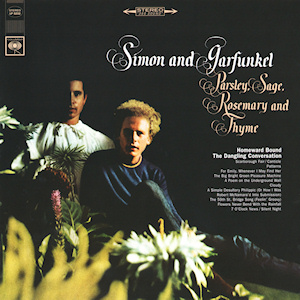
I am old enough to remember buying Simon and Garfunkel’s record Parsley, Sage, Rosemary, and Thyme when it came out in 1966. It’s the one that had (besides the title track) “Homeward Bound” and “The 59th Street Bridge Song” and a couple of lesser known ones that became favorites of mine: “For Emily, Wherever I May Find Her” and “Cloudy.” The last track on Side Two is what made me think of the record today. It was a mash-up, in today’s jargon, of “Silent Night” and a reading of the seven o’clock news.


While I was eating lunch in my classroom I got first word of the shootings at Virginia Tech. That news came along side of John Corzine’s testimony before Congress, Rick Perry’s latest craziness, stories of European struggles, the posturing at the climate conference in Durban, among other things and I remembered being a kid in Zambia in 1966 wondering how to make any sense of the world and finding resonance with those feelings today, forty-five years later. It would be simplistic of me, however, to say not much has changed. I posted a picture on Facebook of when I was a kid in Lusaka and a guy I grew up with there made a comment about it not three minutes after the photograph went live. The world is different than it was then, but the pain and perplexity of what it means to be human seems consistent all the way back to that first Silent Night and beyond. It feels worse now because we’re the ones living these days.

I know it’s nice to imagine the night of Jesus’ birth being calm and serene, with thoughtful and attentive folks gathered round, but the truth is Jesus was born in traffic, if you will, stuck in the barn of a sold out motel in what was, I’m sure, not Bethlehem’s finest street. There was a war going on then, just as his nation was being governed by men who were more concerned with self-promotion and self-preservation than they were effective and meaningful leadership. Most everyday of Jesus’ life could have used both carol and commentator as soundtrack for the creative tension from which he called people to choose love as the ultimate value.

Another song came to mind today because this is also the thirty first anniversary of John Lennon’s death. In 1971, he released “So This is Christmas (War is Over).
and so this is Christmas
for weak and for strong
the rich and the poor ones
the world is so wrong
and so happy Christmas . . .
When that song came out, we were living in Fort Worth, Texas and I was a sophomore at Paschal High School, getting my first taste of what it was like to be an American teenager. I was pulled by the protests against the Vietnam War, even as I am pulled by the Occupy movement today. Though I knew war wasn’t just going to be over because we wanted it to, I also knew the subversive nature of a Love that would sneak into the world as a baby on a back street wasn’t going to run and hide when the pompous and the powerful started shooting up the place.

Simon and Garfunkel were on to something. Turn on the news while you’re listening to your Christmas carols. Pipe it into church while everyone is singing. Come face to face with all that is wrong with and in our world and then sing another verse. We are waiting for Christ to be born again in our time and in our culture because, no matter what the headlines, Love will outlast the lawyers, guns, and money.

Sleep in heavenly . . .

Peace,
Milton

Thursday, December 01, 2011

advent journal: everyday equation

This afternoon, I went with our math teacher and the twelve kids that make up our little high school to a machine shop which is owned by the parents of one of the students. The teacher wanted the kids to go so they could see that math gets used in the real world. I went because I like seeing cool stuff and it meant I didn’t have to teach fifth and sixth periods.

I had never been in a machine shop before. The owner took us all through the 25,000 square foot plant, explaining what they did and showing us a bunch of pretty amazing machines and the amazing people who ran them. One machine, which was twenty feet long, had a tray into which they fed fifteen foot long stainless steel rods, which were about an inch and a half in diameter. The rods met up with a rotating head that held twenty different tools. Every minute and a half, the machine would produce a finished piece, about two inches long, that had a flat top, a threaded side, and a hollow core; it was used in fire suppression equipment on the underside of buses. They make about 10,000 of them a month. The little piece was a work of art.

Later on, we were in the room where they cleaned and packaged the various pieces for shipment to their customers. There was a box of the same pieces we had seen made.

“We are washing these by hand right now,” he said, “but you’ll see in a minute what we are making so we can clean them in our sonic bath” (it used sound waves in the water to do the cleaning). Sure enough, in the next room there was a guy operating a big machine that was drilling holes in a piece of half-inch plastic to make a tray to hold the first pieces so they could go in the sonic bath. I asked why they needed to do that. The owner went on to explain that at the company that uses them there are a group of about fifteen women who put the parts together by hand. They expect the pieces to be a certain way and, if they are not, they women get upset. Recently, it seems, there had been some problems with the consistency of cleanliness, at least to the women who were receiving the parts.

“I’ve known the owner of that company for twenty years,” he said, “and we’ve had that account a long time. But if I don’t make sure those women who deal with the parts are happy, it doesn’t matter who I know. We’ll lose the account.”

I was glad to hear who had his ear.

In the last couple of days, the news has come that our government has passed a law allowing horses to be slaughtered and sold for human consumption and another allowing the indefinite imprisonment of American citizens without charges. Even this week, Congress is flinching at extending the payroll tax holiday though they had no problem making sure their tax breaks for the elite rich in our country were extended last year. The Occupy protesters have been run out of their camps in parks around the country as though they were some kind of threat, and many arrested, though not one of the bankers and financial people who brought the country to the point that people had to protest have even been charged. In this machine shop that is our country, no one is listening to the women, or the men, in the supply room. Our leaders appear to hear and see no one but themselves and those who write big checks.

Too political for Advent? Sorry. The connection for me is that the entire drama of the Incarnation unfolded in the supply room. From Mary to Elizabeth to Joseph to shepherds to innkeepers and immigrant star-gazers, Jesus was born among those who were not policy makers or job creators or people too big to fail. I know I am far from the first to make this observation, nor is it the first Advent it has crossed my mind, but something about thinking of that one woman complaining to the point that it changed the way the companies did business gave me hope, even as I sometimes despair at the lack of leadership and vision in our country.

I don’t think America will save the world or that it is essential for us to stay “the greatest” for the world to survive. I do think the love of God that had the audacity to become incarnate in a poor couple’s kid will save us all if we are willing to find our way to the manger. Whatever happens in our world, more will be changed by people camping in parks together and eating dinners together and sharing food with one another and looking out for each other than by any grandiose gesture of government or multinational conglomerate.

The Bible tells me so.

Peace,
Milton

P. S. -- After I posted this I read that the Senate killed the proposal in the bill that would have allowed for indefinite detention of US citizens outside of the country (as in Guantanamo) but the Senate defeated an amendment that explicitly said it was illegal to do so.

Wednesday, September 28, 2011

jesus, steve earle, and the gay pride parade

A couple of Sundays have passed since Ginger preached on the parable about the workers who get hired at various times during the day and then all get paid the same at quitting time (Matthew 20:1-16). It’s a bothersome parable on its own terms, made even more difficult when heard in American congregations filled with those who have been trained to raise up our so-called “self-made” heroes. The bullet points in the World Geography textbook from which I am asked to teach spell it out (without irony):

• The political system of the United States has been vital to the economic success of the country.
• The government established in 1789 reflected a shared belief in individual equality, opportunity, and freedom.
• These ideals supported an economic system based on capitalism, or free enterprise.
• One of the notions behind free enterprise is the belief that any hardworking individual can find opportunity and success in the United States.
The issue in the story, however, is not a question of effort or work ethic, but of opportunity. “Why do you stand here idle all day?” the master asked. “Because no one has hired us,” they answered. Had he been willing to take them all on the first trip, they all would have been willing to go.

But that’s not my point.

Some time during the week prior to her sermon, Ginger asked me what I thought about the parable. My initial response was to say our attitude about the story depends on where we find ourselves in it. If we think we are the ones who were hired first and worked longest, then the story feels unfair. If we see ourselves as those fortunate to get hired at all, grace abounds. The Saturday after her sermon, I sat in the hall of our Durham Performing Arts Center to hear one of my songwriting heroes, Steve Earle. In recent years, he has become an articulate spokesperson for progressive causes, an ant- death penalty advocate, and a disseminator of grace. His road to the present state has taken him through several failed marriages, a heroin addiction, and a stint in federal prison. As I listened to him speak and sing, I thought, “This is a guy who knows what it feels like to get found late in the day.”

A week after his concert, my Saturday was filled with our church’s involvement in the North Carolina Pride Festival and Parade. For almost thirty years, Durham has hosted our state’s gay and lesbian pride festival on Duke’s East Campus. For the last four years, my involvement has been on two fronts: leading the music for the inter-denominational Communion service and carrying the banner for our church in the parade. A couple of years ago, we decided we would have a short hymn sing before Communion, which takes place in an outdoor gazebo in the middle of food booths and other vendors. That first year, I chose songs I knew and loved. As we started singing “I’ll Fly Away,” “Amazing Grace,” and “Pass Me Not, O Gentle Savior,” people began to gather and sing along. Some of them began to weep. I had, unwittingly, tapped into something deep. These were the songs of their childhood, of their faith before they came out and were told they no longer belonged. As we sang, they were able to reclaim what had been taken away from them in some sense. What once was lost became found.

Not all of them are old songs. One I particularly is listed as “For the Fruit of All Creation” in our hymnal. The final verse, which is my favorite of most any hymn says:
for the harvests of the Spirit
thanks be to God
for the good we all inherit
thanks be to God
for the wonders that astound us
for the truth that still confounds us
most of all that love has found us
thanks be to God
The parade route was heavily lined with well-wishers this year (and a few protestors), thanks to the North Carolina legislature’s decision to put a constitutional amendment to ban equal marriage or any kind of same-gender civil union on the primary ballot next May. As we walked and waved, people waved back and, when they saw we were a church group, said, “Thank you.” That scene played over and over. Somewhere along the route I, the straight white guy, heard the parable with new ears.

Yes, I was on to something when I said how we heard the story depended on where we saw ourselves in it. But I had missed one perspective. From the time I was first introduced to parables, the default setting, when it came to reading, was to assume the king or master or father in the story was God. What if that were not necessarily so? What if, instead of seeing ourselves as workers, we were the one hiring? What if we bring about the realm of God by going back to make sure everyone goes to work in the vineyard?

If God’s realm is one where parents forgive before their long-lost sons even ask forgiveness, where shepherds leave the whole flock to search out the lone lost sheep, where someone will spend the whole grocery budget to celebrate finding one coin in the couch cushions – and it is, then as the Body of Christ we are those called to keep going back, to keep hiring anyone who will work, to make sure everyone has enough, and to remind everyone that there is more enough love and grace to go around – especially those who were taught they did not belong. Isaiah proclaimed:
The Spirit of the Lord GOD is upon me,
because the LORD has anointed me
to bring good news to the poor;
he has sent me to bind up the brokenhearted,
to proclaim liberty to the captives,
and the opening of the prison to those who are bound
In this story called life, we are cast as those called to incarnate the love of Christ to the whole wide world.

How can we afford to do otherwise?

Peace,
Milton

Friday, August 12, 2011

one fair summer evening

The evening began with a conversation – long distance, back when that mattered, between Ginger and me. She was in Birmingham visiting her family; I was in Fort Worth. We had been dating about eight months and both knew we were on a crash course for each other. Somewhere in our words we decided to get married and I said, “OK, but I still want to surprise you with the ring.”

I had about a week and a half to plan the evening before she returned. My friend, Billy and I spent a couple of days visiting the places that were to be the stages for the romantic extravaganza. I was out to create an indelible memory. Ginger dreamed of owning a black Jeep Wrangler, so I borrowed the one David White, one of the kids in my youth group, had gotten for his birthday and drove it up into her front yard. She came out in an amazing read dress. I was wearing a red shirt and a black blazer (with the sleeves rolled up – it was 1989, after all). I put the specially crafted mix tape into the cassette player and we drove across the Turnpike to Dallas. Billy and Patty, our other co-conspirator, were ahead of us making sure the wheels of romance were well greased.

The first stop was the Hard Rock Café, which was still pretty new and incredibly popular. Billy and I had learned earlier in the week that they wouldn’t take a reservation, but the manager said if Billy and Patty would come early and hold the table he would get them out and get us in without Ginger knowing. We walked past a line of people that literally went around the block and I said to the host, “I’m Milton.” He turned and stealthily signaled and I saw them whisk Billy and Patty out through the kitchen, reset the table, and put a bottle of champagne down before we could get there. She had no idea what had happened.

One of the biggest challenges of the evening was I didn’t want to have to drive and hunt for parking all night and, dating a woman whose sense of social justice is in her marrow, I knew extravagance had some limits. I found a company that rented – wait for it – Honda Accord stretch limos and that was a happy compromise. We came out of the restaurant to our waiting chariot. I handed the driver the mix tape so the soundtrack could continue. Our next stop was the West End, Dallas’ newest hangout, where we went first to the fudge maker who had been primed to pick Ginger out of the crowd to be a special helper. When she was done, they awarded her with a big sack of chocolate-peanut butter fudge.

We walked outside for a bit to find a couple singing along the sidewalk (Billy and Patty in borrowed wigs and well disguised, except for Billy’s luggage tag, which Ginger didn’t see). We stopped to listen and Ginger said, “They’re good, but they’re not Boston.” I still get a good laugh thinking about that moment.

From there, we went into the dance club where once again I said, “I’m Milton” and the host signaled the deejay to play my requests, which began with “Straight Up” by Paula Abdul and also included some Anita Baker and Van Morrison. When the third song played, she stopped dancing and looked at me.

“What’s going on?” she asked.

I smiled and stayed silent. While we danced, Billy and Patty hid the ring in a designated spot in the car and left a box with a dozen peach roses (flowers I had sent to Ginger after we decided to get married) and two bottles of Clos du Bois Chardonnay, which we had shared at dinner at the York Harbor Inn when we had been in New England a few months earlier. One was to open that night; the other was to save for our anniversary. We came out of the club and got in the car. The driver cued the music perfectly, and as we began to move, Stephen Bishop began to sing.

time I’ve been passing time watching trains go by
all of my life lying on the sand watching sea birds fly
wishing there would be someone waiting home for me
something’s telling me it might be you
something’s telling me it might be you all of my life . . .
I reached down and offered her the little black box, followed by the roses. I leaned up to the window and told the driver just to drive around for awhile, closed the little door and opened the wine. We ended back at the Hard Rock, where we picked up the Jeep and drove back to Fort Worth and the rest of our lives together.

Life holds only so many moments that actually become what you dreamed they might be. That night was one for me. It was, as my friend Gordon has noted, a ridiculously romantic evening. Then again, I’m a pretty ridiculous romantic myself. Twenty-two years later, I’m still starry-eyed. Tonight comes after she has just returned from being gone for two weeks, much like it was that fair summer evening, now long ago.

My song hasn’t changed: Gigi, it’s still you I’ve been waiting for all of my life.


Peace,
Milton

Sunday, August 07, 2011

recreation

“The presence of your absence bothers me,” begins an old Pierce Pettis song. I’ve sung the lyric both out loud and in my head for several days now as I go deeper into Ginger’s two week pilgrimage to Israel and Palestine that left me here to tend to Schnauzers and in-laws in Durham. The quotidian grace and hope I draw from waking up beside her along with the many ways she permeates my day make this a rather blessed kind of misery, even if it sounds corny. The good news for me is she comes home on Wednesday. I’m ready.

recreation

whether the rib came
from adam or eve
is of no real consequence

the story is not about
primacy or power
when you get down

to the bone – but
connectedness and
something missing

from one without
the other, I know
my joints ache

with your absence
I am missing marrow
and ready for reunion

a walk in the garden
and the way we fit
together side by side
Peace,
Milton

Tuesday, May 10, 2011

an open letter to jim wallis

Dear Mr. Wallis:

Yesterday, you published a post on your blog articulating why your magazine refused to publish an ad from the “Believe Out Loud” campaign, which calls for the full inclusion of LGBTQ folks in our congregational life. In explaining your choice you said, in part:

But these debates have not been at the core of our calling, which is much more focused on matters of poverty, racial justice, stewardship of the creation, and the defense of life and peace. These have been our core mission concerns, and we try to unite diverse Christian constituencies around them, while encouraging deep dialogue on other matters which often divide. Essential to our mission is the calling together of broad groups of Christians, who might disagree on issues of sexuality, to still work together on how to reduce poverty, end wars, and mobilize around other issues of social justice.
As one who grew up Southern Baptist and found Sojourners to be people who stretched and challenged my concept of who I was called to be in this world as a follower of Christ, I am deeply disappointed by your words because they lack the courage and conviction that I’ve seen in your work for justice over the years. I’m sorry to see you, well, play politics and play it safe. At least that’s how it feels to me -- and I know from reading just a few of the comments on your blog that I am not the only one that feels this way. Had the issues regarding equal acceptance and equal marriage were being drawn along racial lines, would you have written the same paragraph?

Last week on Grey’s Anatomy, Callie, one of the doctors who was about to get married, and who was also lesbian, was doubting herself and her commitment to the one she loved because her parents had walked out on the wedding since “the church” would not sanction it. Miranda, one of my favorite characters, challenged her to stay true to her commitment. “The church has a lot of catching up to do with God,” she said. Her words rang in my ears as I read your post.

You are falling behind.

None of us has the luxury of deciding what parts of God’s calling we are going to live out. I understand that we all have interests and abilities that perhaps lead us into one area or another with greater emphasis, but cannot decide, as you have done, that we won’t take up an issue because it’s too controversial or it might affect our ability to raise awareness – or funds – in other areas. Your work in fighting against the injustice of war and poverty is important and valuable. Yet how can we deal only with economic poverty and not come to terms with the spiritual bankruptcy that allows us to discriminate against GLBTQ folks in Jesus’ name? If we, who have the choice to say it doesn’t affect us or it is not our top concern, do not make it a vital issue in our lives how will things ever change? You advocate for the poor because you know their voices will not be heard on their own. Does that stance not demand a universal application?

You are right to think that taking a stand will cost you. Trying to not have to take a stand will cost you more. I also understand, as you say, that not all of us who call ourselves Christian agree on this issue, just as Christians have been divided each time they have had to catch up with God when it comes to including and loving one another. At this crucial intersection of faith and justice, please don’t settle for playing it safe. Whatever you deem your priorities, who knows that you are in this world for such a time as this.

Peace,
Milton

Monday, May 02, 2011

fearless love

I went to sleep last night after hearing President Obama announce the killing Osama bin Laden and woke up to any number of blog posts and commentaries already written. You people need less sleep than I do – and I’m running on fumes. Those of us who love to put words to paper find moments such as this begging for us to write something while, at the same time, I wonder what I have to say that will add constructively to the virtual Tower of Babel filling everything from Facebook to Twitter to the Huffington Post. My reality is writing is part of the way I process what I see happening in the world and in my life. Though I would love to feel that I am saying something original and profound, I’m willing to own that I’m mostly writing to help me sort things out and choosing to do that in conversation with whomever chooses to join in because I believe we sort things out better together than on our own.

Osama’s death doesn’t change much of anything as far as I can tell. Even early this morning, one of the headlines at the Huffington Post talked about the possibility of reprisals from Al Qaeda. We are not safer because we killed him. We will still have to take off our shoes at the airport, still spend a ridiculous amount of money on national defense, still have to listen to our politicians whip themselves (and us) into a frenzy of fear to try and get elected as the one who can protect us. We are still running scared. Some have talked about his death as closure for what happened on 9/11, but their statements beg the question as to what is being closed. The grief is not over. His death replaces no one, nor does it measure us as some sort of equitable revenge. Ghandhi’s oft-quoted words find particular resonance today: “An eye for an eye leaves the whole world blind.” Nothing is solved or healed or bettered by killing Osama. We got revenge, not justice. The satisfaction will be short-lived.

I am left particularly incredulous by those who chose to “celebrate” his death, particularly those who clothed that celebration in Christian terms, as though this was some sort of victory for Jesus – that would be the same Jesus who said, unequivocally, “Love your enemies.” I’m pretty sure assassination was not one of the ways he imagined that love being expressed. Osama’s death is not a religious victory not a triumph of Christianity over Islam. We are not in a holy war. Our nation has chosen to participate in an increasing spiral of violence the consequences of which are far from over. Bin Laden didn’t represent Muslims any more than Fred Phelps or Terry Jones speak for all of Christianity. His presence and actions in the world called us to check our character and our resolve as Christians to show whether or not we are willing to follow Jesus in difficult and dangerous days. We appear to be about as reliable as Peter in the courtyard.

Here’s the part in the post where I begin feeling the creeping resignation that those who share similar views will read on and those who don’t will either stop reading or take time to send some sort of comment to tell me I am idealistic or naïve and even God knows there comes a time when you have to open a can of Whup-ass on those whom you see as enemies. I despair because most of the posts I read today – and perhaps this one – weren’t written with the expectation of a genuine conversation about how to live out our faith. We are writing to be heard more than we are writing to listen, which is the way in which Christianity in America has become most acculturated: we operate by the same polarizing, violent rules of conversational engagement that paralyze our country.

Since early this morning I have had a David Wilcox song on my mind called “Show the Way.” The opening verses say,

you say you see no hope
you say you see no reason we should dream
that the world would ever change
you're saying love is foolish to believe
'cause there'll always be some crazy
with an army or a knife
to wake you from your day dream
put the fear back in your life
look, if someone wrote a play
just to glorify what's stronger than hate
would they not arrange the stage
to look as if the hero came too late
he's almost in defeat
it's looking like the evil side will win
so on the edge of every seat,
from the moment that the whole thing begins
it is love who makes the mortar
and it's love who stacked these stones
and it's love who made the stage here
although it looks like we're alone
in this scene set in shadows
like the night is here to stay
there is evil cast around us
but it's love that wrote the play
for in this darkness love can show the way
As I spoke of this song, a friend reminded me of another Wilcox song written when the AIDS epidemic was the designated dividing line among Christians called “Fearless Love.” The song tells the story of someone in a protest stand-off between the two sides. The verbal violence escalates to someone throwing a stone and hitting a man who was HIV postitive on the head and causing him to bleed. The person holding the sign of judgment was then confronted with what to do about the bleeding person at his feet.
your mind snaps back to where you stand
your church is here to fight a cause
and at your feet a fallen man
whose head is cradled in his arms
though his blood contains his death
and though the lines are drawn in hate
you drop your sign of Bible verse
and help the wounded stand up straight
oh yes the high religious still will scorn
just like that did all that time back
they'll say you helped the other side
they saw you haul that soldier's pack
but now how could you carry that man's sign
in your heart the choice was clear
you didn't join the other side
the battle lines just disappeared
when fearless love, fearless love
fearless love makes you cross the border
“Nothing changes just because one guy gets killed, even if it is Osama,” said one of my eighth graders as he came into class this afternoon. Fearless love, however, changes all of us.

Peace
Milton

Tuesday, April 19, 2011

lenten journal: considerable love

Because Easter is a moveable feast, our twenty-first wedding anniversary falls on Maundy Thursday. So we celebrated tonight. The Playmakers Repertory Company at UNC is doing a production of Big River, a musical telling of the adventures of Huckleberry Finn. The musical was on Broadway in the mid-eighties. The songs were written by the King of the Road himself, Roger Miller. Playmakers put on a great show, as usual, and we had a wonderful time.

At one point early on in the play, Jim tells Huck that life has “considerable tragedy and considerable joy.” One comes with the other. I would go as far to say one is essential to the other. When we have the capacity to experience considerable tragedy, it opens up to considerable joy, and vice versa. To be able to feel deeply means all of the feelings. To keep pain at arm’s length is to do the same to joy. It is also to keep others at bay as well. The shared experience of considerable emotion, regardless of the emotion, is a tie that binds.

One of the songs that most moved me this evening was called, “You Oughta Be Here With Me.” A daughter was singing in grief at the death of her father and in uncertainty of what the future might hold.

if you think it's lonesome where you are tonight
then you oughta be here with me
if you think there's heartache where you are tonight
then you oughta be here with me
because with you I'm whole, without you I'm cold
so if you think about me where you are tonight
then you oughta be here with me
if teardrops are falling where you are tonight
then you oughta be here with me
loneliness calling where you are tonight
then you oughta be here with me
because with you I'm whole, without you I'm cold
so if you think about me where you are tonight
then you oughta be here with me
“There’s bound to come some trouble in your life,” Rich Mullins used to sing, “but that ain’t nothing to be afraid of.” Poets and songwriters all the way back to Ecclesiastes have known what Jim was telling Huck. The contour of our existence goes as low as it does high. The human race is not run on a flat track.

I listened to the woman sing, “You oughta be here with me” seated next to the person who has been here with me more than anyone in my life. Twenty-one years ago, we were juggling last minute wedding details and imagining a life together. The years that followed have brought highs and lows that neither of us could have anticipated. We grew into the promises we made on our wedding day as we walked into days that offered both better and worse, sickness and health. We’re still waiting on the wealth to show up. Now as Ginger’s dad continues to disappear incrementally as his Alzheimer’s takes a stronger hold, we are learning new levels of feeling and sorrow.

The joy takes the face of gratitude for me these days. In the midst of hard times, I lie in our bed at night and listen to the symphony of breathing sounds offered in concert by Ginger and the Schnauzers and I am grateful to be in the room listening to what joy sounds like. The best news I have is, after twenty-one years, the best place I know to be is with my wife.

A number of years ago, I wrote a song with my friend Billy where I tried to imagine what love looked like farther on in a marriage than I was at a time. The title I came up with was “Well Worn Love,” which conjured up an image of lives that had been gently and daily softened and polished by the love they shared in much the same way that the stairs on the old buildings in Boston were changed by the daily foot falls, or the tails of library lions worn smooth by thousands of small touches. The chorus says,
this is the story of two common hearts
that started out young and grew old
they have practiced a lifetime
the waltz of a well-worn love
We’re not yet as old as the couple in my song, and I look forward to many more years together. I’m also happy to say, twenty-one years on, I wrote a pretty good song back then. It was not just my imagination running away with me. I am grateful for the considerable love that Ginger and I share in both our tragedy and joy.

And that we still stay our late on a school night.

Peace,
Milton

Saturday, April 16, 2011

lenten journal: being elmo

I’ve spent the last three days volunteering with the Full Frame Documentary Festival, one of the highlights of the Durham calendar and the largest documentary film festival in the world. I was assigned to the Artist Hospitality Team whose job it was to take the film makers and subjects of the documentaries to and from the airport. What I loved most about the gig was I had twenty-five or thirty minutes with these folks in the car to find out about their movies and to brag a bit on my fair city. I met some wonderful people who had worked hard to get their stories to the screen.

The thing they all had most in common was that their stories took years to tell. Often they had followed their subjects for four or five years, not to mention the time and effort it took to actually get the film funded and produced. The highlight of my weekend was my last run of the morning when I picked up Elmo from the airport.

Kevin Clash is the puppeteer who is the subject of the documentary Being Elmo that showed here this week. I took one of the film’s producers out to the airport to pick up Kevin so he could be here for the screening this afternoon. When I picked up his luggage, he pointed to one small bag and said, “Don’t let that one get crushed; it’s Elmo.” Having been a serious Muppet fan for many years, I was very careful with the luggage and quite excited to be the one driving them all back to town.

This afternoon, I got to see the movie.

When Kevin was nine years old, he saw Sesame Street and the Muppets and was so captured by them that he started making puppets of his own. He then began doing puppet shows in his yard, which led to someone in Baltimore discovering him and bring him to a local TV kids show, which led him to be discovered by Captain Kangaroo and then Jim Henson. When he joined Sesame Street, Kevin didn’t have a set character that he played with any regularity. Elmo had only a small part on the show and the puppeteer who was doing him was frustrated with what he was doing. One day, he tossed the puppet to Kevin and said, “Do whatever you want with this one.”

And Elmo, as we know him, was born.

When Kevin talked about how he developed the character of the little red puppet, he said he began to study the other successful characters on Sesame Street and realized that each one had a defining characteristic. The more he thought about Elmo, he realized what defined Elmo was he loved everyone. From that realization, Kevin brought the Elmo we know into being, who is one who loves better than he does anything else. “Elmo loves you,” the little red guy said over and over, and that unabashed, unfiltered love was the driving force of the movie.

I could feel the tears running down my cheeks as I watched people of all ages fall into the arms of the little red ragamuffin or break into smiles when he laughed. What Elmo understands is when we share love from the core of who we are we create space for all of us to teach and learn and pray. I watched Elmo and I wondered about my own defining characteristic, about what animates my life and my faith.

After the movie, I met Ginger to go to a wedding reception for a couple whom Ginger married while I was watching Elmo. The groom was English and the bride from Durham. They are living in England and got married here in her home church and town. As their friends and family talked about them, what became clear was they, too, were defined by the way they loved both one another and those around them. The evening was one of pure celebration.

From the reception, we headed to Watts Grocery where we met Jay and Julie, two of our intentional family, and we ate and drank and laughed and talked as we have done more evenings than I can count. As we laughed, I thought of Elmo’s giggle as he hugged the kids of all ages that gathered around him after the screening was over, of Kevin Clash as he called an eight-year old girl to the front who makes her own puppets and whom he is mentoring as others did for him. I looked at Ginger, to whom I will have been married twenty-one years this coming Thursday and I thought, much like Elmo we all come to life when our love is what defines us.

Peace,
Milton

Tuesday, April 12, 2011

lenten journal: if darwin prayed

If you haven’t heard, Rob Bell has written a book.

I haven’t read it, but he apparently has a lot of nerve claiming God loves everyone. What I have read are any number of blog posts, articles, and straight out rants claiming that Bell’s argument that Hell might not exist is not just wrong but evil or dangerous – or both. A Facebook acquaintance posted a link – without irony – to an article by John McArthur entitled, “Rob Bell: A Brother to Embrace or a Wolf to Avoid?”

Seriously?

I used McArthur’s own search function on his blog to see if he ever called Fred Phelps into question and found nothing.

Michael Morrell is a Facebook friend I have never met, but I count him as a friend because he sends me books, thanks to theOoze.com. The latest one will probably make John McArthur invite Rob Bell over for dinner just because of the title: If Darwin Prayed: Prayers for Evolutionary Mystics by Bruce Sanguin. The author is a pastor in the United Church of Canada and writes wonderfully about what it means to come to terms both with our ev ever-changing God and our ever-changing universe. Here is an excerpt from the Prologue:

Within the miracle of a living and evolving universe, our understanding evolves regarding God, the Christ, Jesus of Nazareth, what it means to be a faith community, and what it means to be human. There is no final, un- changing form of Christianity. God’s last word was not uttered two thousand years ago in Nazareth. We can detect in the pattern of Jesus’ life, death, and in the stories of His resurrection, the evolutionary bias of an eternal, loving Presence. The failure to update our theological and liturgical models has resulted in modes of worship, spiritual practice, and images of God, that are out of sync with reality (and Reality) as we know it to be.
I’ve been meaning to write a review for awhile, but reading McArthur’s post – and my acquaintance’s willingness to pass it along – gave me the impetus to pass along some words intended to foster faith and community. Sanguin wonders aloud in his opening poem how Darwin might have responded had faith been framed differently for him. Though the poem is long, I’m posting the whole thing here because I couldn’t figure out what to cut.
If Darwin Prayed
I wonder, if Mr. Darwin
had imagined a God
bigger than the theist’s puppeteer—
and less aloof
from nature’s ways—
how he might have prayed.
I wonder,
if he had viewed the great march of time
with a mystic’s eye—
as Spirit’s unhurried play with form and function,
not creation leaving God in the dust
and pulling itself up by its own bootstraps—
if his heart might not have burned with faith.
I wonder,
when the push of Eros
and the pull of the possible
caused him to close the City of God
and leave the dreary seminary
to set sail on board his Beagle destiny,
if he ever imagined that he embodied Spirit’s
irrepressible urge to evolve.
I wonder,
when he reflected on the mystery of a finch’s beak
and the glories of the Galapagos,
if Mr. Darwin considered his own adaptive brilliance
that brought forth The Origin of Species
(his great gift to theology)
an occasion of an even deeper Mystery—
evolution awakening in him.
I wonder,
if, hunched long years
over beetles and mollusks,
he ever considered
St. Paul’s self-emptying God,
touching all with a rising,
noncoercive Presence,
and then going on ahead of us—
as did the Galilean—
calling from an undissected future,
beckoning this sighing creation
toward freedom and fullness of being.
I wonder, Mr. Darwin,
if your beloved Emma might have worried less
over your apostasy
if you could have played the prophet
and announced, with the Baptist,
evolution was filling every valley
making low the mountains,
preparing a highway
through Descartes’ desert,
for the advent,
and not the end,
of God.
(If I were God,
I too would keep my presence hidden,
an allurement of love that predestines no fixed future,
conferring maximum dignity upon life,
as together all that is
joins in the great procession
of the formless,
assuming forms most glorious,
crowning the human ones
with a distinctive diadem—
the capacity to select our own future,
naturally).
I wonder
if Darwin prayed.
The rest of the book offers prayers that follow the ecclesiastical seasons, each tied to a scripture passage, with most of them having been used in worship at Sanguin’s church. The overarching sense of the prayers is one of wonder and openness. These are not the prayers of people convinced they have the answer, or that they need to protect God, but people thriving on questions and committed to being lost in wonder, love, and praise.

I want to be dangerous like them.

Peace,
Milton

Sunday, March 27, 2011

lenten journal: sunday sonnet #23

The passage for today was Jesus meeting the woman at the well. My sonnet was particularly affected by the following video. Thanks to my friend Down Under, Simon, for posting it.


sunday sonnet #23
a woman of no distinction, she
came alone to the well at noon;
engaged her in conversation, he
came her reputation to impugn –
at least that’s what she thought when they met,
then his questions gave her pause to think
their meeting might be more than a threat
for he turned and asked her for a drink.
He knew her past and stayed to hear her --
the ways that she’d been hurt and been wronged;
she’d made sure no one could get near her
now he was saying that she belonged.
This is how God’s grace is sown:
to be loved is to be known.
Peace,
Milton