Showing posts with label kindness. Show all posts

Monday, March 28, 2011

lenten journal: cloud of witnesses

the eighth grader who wants to know
if I’ve graded the paper he turned in yesterday.
the neighbor ranting on the listserv
taking out his frustration on the rest of us.

the guy at the shelter who helped me
carry in the chicken for tomorrow night’s meal.
the woman in front of me at Costco
who didn’t seem prepared for the check out line.

the President who spoke about Libya
trying to explain what our country is doing.
and I’m sure there was at least one
whom I walked by without even noticing.

the cloud of witnesses of my day to remind me:
be kind, for everyone is fighting a great battle.

Peace,
Milton

Tuesday, January 12, 2010

hands of kindness

I wish I knew how it all began. Maybe it was the cold snap last weekend, but then again, maybe not. Something happened, though, and all I was left with was a perfectly viable Internet connection and a MacBook that couldn’t find it. Ginger’s laptop could, but not mine. I let it sit for Friday and Saturday, because I was working, tried to see what I could figure out on Sunday; by Monday I was doing my impersonation of Blanche DuBois: forced to rely on the kindness of strangers by calling Apple tech support.

The guy was personable and engaging, even as he informed me that my computer was past its service contract, which meant I would need to pay for help, and then he said, “But let me take a few minutes to see if I can help.” Forty-five minutes later, I knew more about what it wasn’t, but could do little more than say goodnight and go to bed. Today, I decided to call again. A woman answered this time, informed me of my lapsed contract, and then said, “But let me see if I can help.” She gave me a good half hour of her time, finally passing me on to the Wireless Dept. of Apple Help, and to one more person who also told me I would need to pay for a service contract and then said, “But let me see if I can help.” He took me through some screens and maneuvers previously unknown to me and finally said the problem was with my DSL modem, which meant I needed to call Verizon. I was so far in already, I decided to keep going. I learned, first, that Verizon had a specific Mac department, so I got to make a second call and talked to yet another nice tech support person who had a whole new set of exercises for me to try. Just when it appeared I had flummoxed my fourth techie, he asked if he could “share my screen” and soon he was moving things around on my computer while I sat and watched. One of the windows he opened was one I had looked at with everyone I talked to. He stopped and asked if a small box at the bottom of the screen was checked. (I would give you more specifics, but I’m scared to open that window again for fear of changing something.) I told him it was, and he said, “That’s the problem. That box should not be checked. It’s often the problem, but it is such an insignificant thing that we often forget to look at it.”

And, with the click of a mouse, my problem was solved. OK, three hours later and a click of the mouse, but, hey, I’m back in business thanks to four very patient and personable people whom I met because I needed help.

And they helped me.

My morning began with my joining the story of Miep Gies already in progress on NPR’s Morning Edition. Gies is the person who hid Anne Frank and her family; the story was marking her death on January 11; at 100, she was the last of the Dutch citizens who hid the Franks from the Germans. I was struck, in particular, by this section of the story.

MIEP GIES: I, myself, I'm just a very common person. I simply had no choice. I could foresee many, many sleepless nights and a life filled with regret if I would have refused to help the Franks. And this was not the kind of life I was looking for at all.

TERI SCHULTZ (NPR Correspondent): Gies explained another motivation for emphasizing her modesty. She said if people are allowed to think it takes remarkable qualities to act boldly on behalf of others, few will attempt it.

Ms. GIES: People should never think that you have to be a very special person to help those who need you.
I suppose the truth in her words applies whether or not one’s life is on the line. I don’t mean to think of the kindness I received to carry the same weight as what Miep Gies did for Anne and her family, but I do think it’s the same motion. The difference is in degree, not substance. We were built to be kind, to be helpers, if we are willing to exercise those muscles.

On the same Friday night my Mac lost its way, Ginger and I spent some time at her favorite sermon incubator, the Starbucks on Guess Road. I didn’t yet know of my dilemma because I took only a book – one of my Christmas presents – Ed Dobson’s The Year of Living like Jesus. Dobson is a retired pastor who has ALS and decided to spend a year trying to live – eat, worship, act, speak, be – like Jesus as much as possible. As you can imagine, it was not an easy year. What struck me as much as anything was the way his search for Jesus pried open his heart to experience life with more compassion. We left the coffee shop in what was becoming a bitterly cold evening (even by Boston standards) and were talking as we drove home. Then Ginger said, “Maybe we should give the person at the bus stop a ride.”

I hadn’t seen a person or a bus stop, but I made a u-turn on what was an empty street, and we drove the two or three blocks back to where she was. Ginger rolled down the window and asked her if she wanted a ride. “Yes Ma’am,” she said, and got in the car. She was in her twenties, I figured out from what she told us of her story, and was on her way to see a friend. Durham is not that big a city, so we were only eight or ten minutes from her destination. We dropped her off and worked our way back home, wondering out loud why we didn’t pay more attention to lonely souls standing at bus stops. I was grateful we stopped; I was even more grateful for Ginger’s eyes. We may not have to be special people, you see, but we do have to look for one another.

Bob Bennett
wrote a song many years ago on his Small Graces CD that I keep coming back to, and I thought of it again tonight. The chorus says, simply:
there’s a hand of kindness holding me
theres a hand of kindness holding me
holding on to me
I have learned (again) that kindness is not an abstraction; it is hands-on stuff. And we are the hands.

Peace,
Milton

Wednesday, August 26, 2009

he's got danny glover eyes

We have a new dishwasher at the restaurant at Duke. His name is Arnaldo and he is from Cuba. He is about my height and, I’m guessing not much over half my weight. His skin is dark – ebony – and yet luminous enough to let you see the lines worn into his skin by wherever life took him before he ended up in our kitchen. The way those lines shape and mark his face allow him to exude the same kind of calming presence as Danny Glover did when he turned to Kevin Kline and said, “Man, get yourself to the Grand Canyon.”

That's it: he has Danny Glover eyes.

(And I hope the obscure reference makes you go watch the movie.)

He comes into the kitchen promptly at five, shakes my hand, and says, “How are you, Sir?”

Sir. So, you see, he has me smiling from the start. And then he goes to work. First, he washes whatever dishes and pots and utensils and bowls we have managed to stack into strange sculpture by the dish machine in the midst of our prep. He then cleans up his area to get it ready for dinner service and then asks me for something to do. Everyday. And with that question he moves from washing to being a part of the prep team, which is good because he actually is a cook; the job, however, was for a dishwasher and a job was what he needed. He doesn’t complain. He works and he smiles and he is kind. Kind in a way I rarely experiece. Kind in a way that changes the way the room feels when he walks in. Kind in a way that makes me glad we work together, even though tomorrow will mark four days that we have known each other. Kind in a way that makes me wonder about me and what it feels like when I walk in the room, whatever room that might be.

Our week has been, as they say in the restaurant business, a “soft opening”: we had eighteen customers the first night, thirty-six last night, and fifty tonight. I’m not much at geometric progressions, but if things continue we should hit a thousand soon after Labor Day. We are happy because it was well into September last year before we hit fifty. We are off to a good start. And we are all tired because we have been going full strength all week, trying to make things the best they can be. I’ve had three ten or eleven hour days in a row and there are a few more to come without much down time in between over the next couple of weeks. Yet, I find myself looking forward to work and one of the reasons is that I get to be around Arnaldo and share in his kindness.

As we move toward the end of the dinner shift and things slow down on the line, the cook’s job turns from creating to clean up and the dishwasher moves into full motion: the last hour is his heavy time, getting everything washed and put away. As Abel and I were wrapping and labeling things to go back in the walk-in, I could hear Arnaldo singing from the dish area. He was singing in Spanish, so I didn’t understand him, but what I did comprehend was he was not singing as though he needed something to get him through the stacks of pots and plates; he was singing like he had the afternoon off and the top down on the Wrangler, full of joy and life.

I am fortunate in these days to say part of what happens when I go to work is I get to watch and listen to Arnaldo sing and be kind. Tomorrow will be a good day.

I’m sure.

Peace,
Milton

Friday, May 29, 2009

waking up

I’m about a week and a half into the resurrection of the ritual of writing my Morning Pages and I’m already feeling a shift. I’m getting used to getting up and, other than making the coffee, letting those three handwritten pages be the first thing I do. Those scribbles are starting to shake up my soul.

Something about waking up with a pen in my hand seems to set the prevailing themes of thought for the day. I woke up today realizing I had not spoken to my parents or my brother in several days and I found time to call them this afternoon. On a more profound level, I’ve felt a growing sense of restlessness in my job of late and this morning I woke with Paul’s words leaking out through my fingers:

“[F]or I have learned, in whatsoever state I am, therewith to be content.”
The seed was planted last night when Ginger asked me if I was happy. When I said, “Yes,” she told me I didn’t always seem that way of late. And she’s right, yet the past few days have brought a shift. As a therapist told me long ago (and I have repeated here more than once, I’m sure), the only two things I can change in any given situation are what I do and say and how I feel. My control of the circumstances ends there. I was in a more observant place when I answered her question last night and followed her response by saying when I took time to remember who I get to spend my life with, my home, my friends, and the fact that I get to do something I love for a job, I think life is pretty good.

Two nights ago left me almost sleepless because I had brought home my frustration with me from work. The events of the day had left me feeling taken advantage of and I chose to pack my bitterness in a take out box rather than shake it off in the parking lot. The bleary-eyed morning pages that followed woke me to the realization that, rather than allow myself to feel victimized and bitter (as Cherry’s friend says, “Bitter is a flavor, not an emotion”), I need to speak up for myself (I’m working on that one) and I can chose how I want to feel at work. You see, part of the changes are I’ve been moved from cooking on the line to expediting the shift, which means I call the tickets and check the plates before they go out to the dining room. It also means I get to set the tone in the kitchen, for the most part.

I love the job.

After my morning musings, I came across Marcus Goodyear’s post at HighCallingBlogs.com and began to see the theme of my day, which was my day off. Part of what he had to say was:
We can talk about glorifying God through our work all we want, but if we’re not also serving our neighbor we are completely missing the point. We can’t love God without loving our neighbors. And loving our neighbors means showing mercy to them.
He also quoted a line from a Marge Piercy poem that is one of my favorites and worth including here.
To Be of Use

The people I love the best
jump into work head first
without dallying in the shallows
and swim off with sure strokes almost out of sight.
They seem to become natives of that element,
the black sleek heads of seals
bouncing like half-submerged balls.

I love people who harness themselves, an ox to a heavy cart,
who pull like water buffalo, with massive patience,
who strain in the mud and the muck to move things forward,
who do what has to be done, again and again.

I want to be with people who submerge
in the task, who go into the fields to harvest
and work in a row and pass the bags along,
who are not parlor generals and field deserters
but move in a common rhythm
when the food must come in or the fire be put out.

The work of the world is common as mud.
Botched, it smears the hands, crumbles to dust.
But the thing worth doing well done
has a shape that satisfies, clean and evident.
Greek amphoras for wine or oil,
Hopi vases that held corn, are put in museums
but you know they were made to be used.
The pitcher cries for water to carry
and a person for work that is real.
The real work of my life is in giving mercy: “a disposition to be kind and forgiving.” In the common tasks of the kitchen, I am called to contentment and compassion. I can’t do either one in my sleep. I have to be awake.

“Blessed are the merciful, for they shall receive mercy,” Jesus said. Though my week has not necessarily borne that out, the real work of my life also entails leaning into those words as though they will come true, just as I must trust I am a vessel shaped to share love with those around me.

Sleeper, awake.

If I am going to be of use, I must remember every move matters: every cut of the knife, every spoon on a plate, every word from my mouth, every beat of my heart. If I am to be merciful, as I am called to be, I must be intentional. Compassion is not an accident. Neither, I suppose are bitterness or complacency.

The choice is mine.

Peace,
Milton

P.S. – How could I not end with this piece? And I love that the guy is sitting in his kitchen.

Wednesday, May 20, 2009

try a little kindness

Ginger called me from the Festival of Homiletics today after hearing Craig Barnes because she wanted to pass along something he said (and I’m writing it as I remember it, not as a direct quote): “Preachers are ‘minor poets,’ which is to say they speak a particular truth to a particular people.” The point is not to speak to everyone in the world, but to speak a truth that will matter to those in the room with you. His definition of “minor poet” led me to some poetry reading of my own before I go to work at the restaurant for the evening.

Once again, Naomi Shihab Nye:

Kindness

Before you know what kindness really is
you must lose things,
feel the future dissolve in a moment
like salt in a weakened broth.
What you held in your hand,
what you counted and carefully saved,
all this must go so you know
how desolate the landscape can be
between the regions of kindness.
How you ride and ride
thinking the bus will never stop,
the passengers eating maize and chicken
will stare out the window forever.
Before you learn the tender gravity of kindness,
you must travel where the Indian in a white poncho
lies dead by the side of the road.
You must see how this could be you,
how he too was someone
who journeyed through the night with plans
and the simple breath that kept him alive.
Before you know kindness as the deepest thing inside,
you must know sorrow as the other deepest thing.
You must wake up with sorrow.
You must speak to it till your voice
catches the thread of all sorrows
and you see the size of the cloth.
Then it is only kindness that makes sense anymore,
only kindness that ties your shoes
and sends you out into the day to mail letters and purchase bread,
only kindness that raises its head
from the crowd of the world to say
it is I you have been looking for,
and then goes with you everywhere
like a shadow or a friend.
The only thing I would say to Barnes, other than, “Nice work,” is whether major or minor, it seems to me poets find far-reaching truths by revealing what they see in the small world in front of their faces. Though kindness may change the world, for instance, we begin by remembering it ties our shoes.

And gives me grace to find meaning in the evening that lies in front of me.

Peace,
Milton

Wednesday, March 25, 2009

lenten journal: a taste for the mundane

When we opened the restaurant at Duke last fall, we averaged about thirty customers a night; fifty was busy. Over the course of the semester, the number grew to where fifty was the average. This semester, we’ve seen our customer base expand to where sixty-five is a slow night. Tonight we served ninety and topped our highest sales amount to date. Getting busier takes some adjustment, because we have to rethink what “normal” is. When the number of covers we do every night (that’s restaurant lingo for the number of dinners we serve; why, I do not know) increases without the kitchen staff growing, what has to be done in a normal day of work changes, too.

When we first moved to Boston, I had a part time job at the Blockbuster Video in our Charlestown neighborhood. Arlene, the assistant manager, was married to a Boston cop. What I knew of the life of a police officer came from Hill Street Blues. I was surprised at how mundane the daily life of a cop really was. There just weren’t that many shootouts to be attended to.

Thanks to Top Chef and Iron Chef and the Food Network in general, my profession gets its share of play, making it look glamorous and interesting, when much of the day is fairly routine and mundane: chopping and cleaning and slicing and cleaning. Though I get to make cool stuff and wear a white jacket, what I do is manual labor, and somewhat repetitive. Not a day goes by that I don’t chop my share of onions and celery and carrots for the two soups I have to make. I bake the bread for dinner each night. At least twice a week I have to make desserts (the same ones). Ii cut steaks and fish and roast chickens. And then, as I said, there’s the cleaning: sanitizing the stainless steel countertops, sweeping and mopping the floors. Once a week, I take inventory for the coming week’s food order.

I also come home most nights and try to write, which is its own mix of mystery and mundaneness (mudanity?). Tonight, in my Writer’s Almanac moment, I followed the link to author of today’s poem (a jewel of its own), Mark Strand, to find one that had been featured a year or so ago:

The Continuous Life

What of the neighborhood homes awash
In a silver light, of children hunched in the bushes,
Watching the grown-ups for signs of surrender,
Signs that the irregular pleasures of moving
From day to day, of being adrift on the swell of duty,
Have run their course? O parents, confess
To your little ones the night is a long way off
And your taste for the mundane grows; tell them
Your worship of household chores has barely begun;
Describe the beauty of shovels and rakes, brooms and mops;
Say there will always be cooking and cleaning to do,
That one thing leads to another, which leads to another;
Explain that you live between two great darks, the first
With an ending, the second without one, that the luckiest
Thing is having been born, that you live in a blur
Of hours and days, months and years, and believe
It has meaning, despite the occasional fear
You are slipping away with nothing completed, nothing
To prove you existed. Tell the children to come inside,
That your search goes on for something you lost—a name,
A family album that fell from its own small matter
Into another, a piece of the dark that might have been yours,
You don't really know. Say that each of you tries
To keep busy, learning to lean down close and hear
The careless breathing of earth and feel its available
Languor come over you, wave after wave, sending
Small tremors of love through your brief,
Undeniable selves, into your days, and beyond.
Man. What he said.

For all of the frontiers that still may be, for all the places I want to go where I have not yet been, for all that appears to be undiscovered by me (though most of it already found by someone else), my daily life holds new things when I am willing to develop “a taste” for the mundane, and cultivate a sense of wonder in ordinary things.

Some time back, I got a note from someone who reads my blog and shared a connection to Coryell County, Texas, where I used to pastor, wondering how someone who used to pastor a part-time Southern Baptist Church outside Gatesville, Texas ended up as a chef and married to a minister in the United Church of Christ. Though there were a couple of amazing experiences that became altars along the way, for the most part it happened as Strand describes: the one thing leads to another, that leads to another. I followed my heart (and the woman I love) in big things and in small things, the daily gestures – not unlike the making of the mirepoix – that build a life out of the bricks we call days. I understand the fear of having nothing accomplished, though that speaks more to my own sense of not being enough than it does to what my life adds up to. In my best moments, brought upon by things like Strand’s poem, I know showing up for life everyday and doing what I can to be kind and open adds up in the midst of the cooking and cleaning. and the coming home each night to the one who loves me best, in all sorts of ordinary ways.

Peace,
Milton

Saturday, March 14, 2009

lenten journal: march fourteenth

The tale of my day is less
story than scrapbook:
a stop at the supermarket,
the tire store, Chik-fil-a.
Here’s the smile I brought
home from the young
woman who surprised
me with the joy she found
serving my sandwich:
“My pleasure,” she said
I still have a piece of
conversation, I found
worth keeping, with the
young man at Sears who
sold me two new tires
and called me “Buddy.”
But it was in the line
at Old Navy, where
I had gone to return
two pairs of pants, that
I realized my place on
the page that is today;
the line was ten deep
and there were only two
(too few) cashiers;
I chose patience over
pugnacity and waited
my turn to turn in my
merchandise. The man,
not so young this time,
apologized for the wait.
“That’s OK,” I said, “Buddy.”

Peace,
Milton

Sunday, October 26, 2008

that reminds me of an old joke

Over the past several weeks I’ve had to learn how to send text messages because it is my boss’ preferred way of mobile communication. By accident one day, I pressed a button on my phone that read, “T9word,” and discovered my choice enabled my phone to anticipate the word I was typing, thus speeding up the process. When I finish a word, my phone automatically throws up the word that followed it the last time, assuming (it seems to me) that I am a man of very few sentences, or at least amazingly predictable. What began as a convenience has become quite claustrophobic.

As the election draws near and the volume continues to rise from all directions (though, I suppose, in our polarized culture that should read both directions), it seems we are living in a T9 world. When one side speaks, the other fills in the words before they are finished, not because they are listening but because they are readying their response. For all the rallies, press conferences, punditry, analyses, interviews, and whatever else fills up our twenty-four hour news cycle, it’s been a long time since anyone said something that mattered – even longer since anyone listened.

In the introduction to her sermon this morning, Ginger talked about the twenty-five years her mother ran a day care in her home. Rachel has an amazing way with wee ones. One of my favorite stories is one Ginger told this morning. Rachel went to the group playing outside and said, “OK, people, it’s time for lunch.”

One three-year old turned to another and said, “Her called us people.” Even at three, the little girl understood what it felt like to be respected, regarded, and taken seriously as a human being.

Over the quarter century, every child who came through that house learned this verse, almost before anything else:

BE YE KIND, ONE TO ANOTHER.
Ginger then turned to the old joke about the preacher who preached his first Sunday before his new congregation and was well received. When he preached the same sermon the second Sunday, the deacons were a bit befuddled, but cut him some slack since he was still getting settled. When he preached the exact same sermon a third time, they confronted him.

“I’ll be happy to move on,” he said, “as soon as you get this one right.”

Her words took me back to one of her sermons that has hung with me for almost two years, in which she quoted Philo of Alexandria:
BE KIND, FOR EVERYONE IS FIGHTING A GREAT BATTLE.
When I wrote about it then, I was working for an erratic and eccentric man who seemed to thrive on making the people around him miserable. Taking her words to heart was a challenging spiritual journey for me. I would love to say I have mastered the art of kindness and have moved on, but it is not so. I need to hear the same sermon again and again, as I did this morning.

Our NPR station was having their fundraiser this week, so I changed stations just to hear something other than the appeals for money. I landed on the local talk radio station, which is a world into which I seldom venture. I felt as though I had crossed into a parallel universe. That they presented a view farther to the right of NPR or me was not a surprise; the level of volume and vitriol was, however. These are guys who command huge audiences across the country, or at least that’s my perception. How can anger that severe be so popular?

My question is not an ideological one. I’m not asking why those right wing talk show hosts can’t be as thoughtful and quiet as their liberal counterparts. My impression is there is plenty of anger on both sides to go around. I’m not looking for an Us vs. Them scenario, either, though that seems to be the most American of perspectives. We cannot afford, however, to let ourselves see it as the Christian perspective.

When they asked Jesus what mattered most, he leaned back into the old joke Ginger told and preached the same sermon:
LOVE THE LORD YOUR GOD WITH ALL THAT YOU ARE
LOVE YOUR NEIGHBOR AS YOURSELF.
Regardless of our political preferences, our fundamental allegiances are to God and to one another. Not to country. Not to party. Not to ideology. Not to personality. Not to stock portfolio or hedge fund. Not to class or race or even religion.

To God.
And to one another.

As we sang in our service today:
We are called to be God's people,
showing by our lives God’s grace,
one in heart and one in spirit,
sign of hope for all the race.
Let us show how God has changed us,
and remade us as God’s own,
let us share our life together
as we shall around God’s throne.
We are all wonderfully and uniquely created in the image of God and we are all wounded. What was said of Rachel by the little one can be said of God: “Her called us people.” May we bear the grace given to us in a way that shows kindness to one another.

And may I keep the old joke close because I’m going to need to hear this again.

Peace,
Milton

Wednesday, September 17, 2008

love and lesser things

I was looking out Towanda’s Window the other day and saw this:

Justice is what love looks like in public – Cornel West
The phrase has stuck with me because I’ve kept thinking about what love looks like in public, and what form love takes as it gets lived out in our various relationships.

Church, for instance.

Tuesday night we had our “expanded” church council meeting, which happens a couple of times a year and includes not only the chairs but also everyone on the various boards and committees. I’ve been asked to be a deacon for the coming year, so I was also asked to attend the meeting. I arrived late because I work evenings. By the time I got there, the various groups were finishing up their individual times and were gathering back together to report. We have the same committees as most churches: trustees (building and grounds), finance, Christian education, Christian service (outreach), deacons, and a couple of others I can’t remember right now. We also deal with many of the same issues as most churches: how to meet the budget, how to take care of the buildings, how to care for our membership, how to reach others. As I listened to the reports, comments, and questions, I thought, “This is what love looks like in public.”

Marcus Goodyear is kind enough to send me books to read and review every so often. I got two last week: The Emerging Church: A Model for Change and a Map for Renewal and The Becoming of G-d: What the Trinitarian nature of God has to do with Church and a deep Spirituality for the Twenty First Century (also a book about the emerging church). I’ve not yet had a chance to begin reading either one, but the two titles adding to what is a shelf or two now of books calling the church to change gave me pause as I saw them on the table when I got home from the meeting. For some of those calling the church into this new century, the kind of meeting we shared Tuesday night is an easy target. The world is dying and we’re sitting around talking about what color to paint the hallways. Jesus didn’t call his disciples to bog down in those kind of details. Committee meetings become, then, the incarnation of complacency and spiritual shortsightedness. Rise up, ye men and women of God; be done with lesser things.

Those who know me also know I’m not a particular fan of meetings and I came away inspired by our time together last evening, not because of the particulars of any committee report as much as how we treated one another: we looked like love in public. If we cannot prove faithful to do justice and love kindness and walk humbly with God when we are discussing the regular on goings of our congregation, how can we expect to emerge as anything close to who Jesus calls us to be when it comes to the grander gestures?

Almost twenty years into my marriage, I continue to be reminded that love shows up best in small things. As much as a bunch of peach roses can bring a smile to Ginger’s face, the daily remembrances of making her coffee or cleaning up here and there (OK, so maybe it’s not everyday) are my best way of living out my love. The small statements of solidarity are what build trust and let her know I’m with her, period.

In the day to day of church life we have the same kind of chance to tighten the bonds and incarnate God’s love to one another. I saw it last night in our meeting where listening held a greater value than speaking, affirmation was more important that being adversarial, and kindness was the theme. To live out our love in public is to realize if we can be faithful in these lesser things, then we will emerge as true followers of Jesus. Let us not be done with them; let us infuse them with hope and grace and meaning.

Man -- the gospel according to committee meetings. Who knew?

Peace,
Milton

Monday, November 05, 2007

the kindness of not having to be alone

There’s an old joke about a preacher standing up one Sunday and saying, “Today we are going to confess our sins to one another and find forgiveness.” Members of the congregation began to stand, tentatively at first, and tell their secrets. The pastor would respond, “Thank you. You have confessed and you are forgiven.” As the service continued, the confessions became bolder and more outlandish. When one man spoke of his relationship with some of his farm animals, the pastor said, “Oh, brother – I don’t believe I would have told that one.”

From time to time, I come across culture watchers and social commentators who lament the loss of privacy in our society, pointing out (and often pointing at the blogging world) that we are giving our privacy away more than it is being taken from us. The question is a live one for me as I sit down to write: how much do I tell? In Bird by Bird, Anne Lamott says if you want to be a writer you have to write as if your parents are dead. I understand her point about getting past some false internal filters and I don’t want my parents’ deaths to be the prerequisite for my being able to put pen to paper (fingers to keyboard?).

So “how much” is not the first question. What comes before is I must ask, why am I telling the story of my life? Needing to speak or be heard, or feeling as though I have something important to say are not adequate reasons on their own, I think. A quick trip through my Bloglines feeds each day reminds me my voice is not more important than another’s. At the bottom of it all, I write to connect – and by that I mean something beyond having folks comment on the posts (though I like reading the comments); I mean working to be one of the voices that pulls people together rather than one of those that tears things apart.

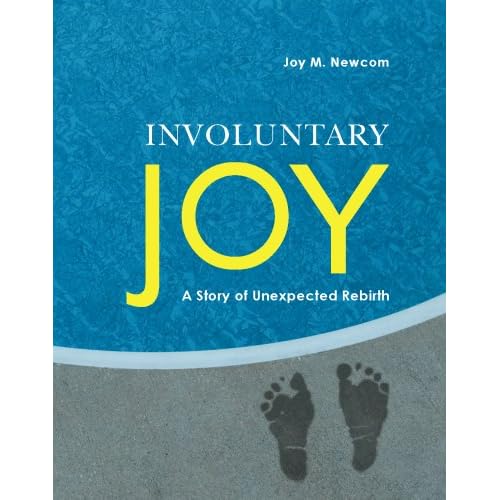
One of the relationships in my life that has found a way to stretch over the miles and years is with my friends Joy and Mark, who live in Iowa and both teach at Waldorf College. Joy is also a writer. Their first son was born with multiple birth defects; he is now sixteen. She wrote a book about their lives so far called Involuntary Joy. This week, in response to my Playgrounds & Pain post, she sent a wonderful email message, part of which said:

I've just returned from a small book signing. A few women--who have already read Involuntary Joy--shared comments that will be helpful as I attempt to move forward with finding an agent/national publisher. Everyday I see my son's joy over things that I might miss if he had not taught me how to look. I've explained that reality the best way I know how: Involuntary Joy. However, asking others to share the journey through reading makes for a bold invitation. The ones who accept are rewarded from the ride that is that portion of our life's journey. But I'm finding that some start to read and nearly quit because our life's pain is too much. (The ones who've talked to me have not quit reading, but admit they almost did.) One woman--who said she loved the book--suggested that it might be necessary to not tell everything in order to find other readers. I'm extremely open to such. In fact, would welcome the opportunity to have someone attempt to define what parts of our lives aren't necessary to share. But I have this lingering wonder: What kind of journey would they be taking with our family then? Can the rewards of a less intensely painful read be as great? Would the concept of life's involuntary joys become as fully known?
Her questions sent me first to Mary Oliver’s wonderful poem, “Wild Geese”:
You do not have to be good.
You do not have to walk on your knees

For a hundred miles through the desert, repenting.

You only have to let the soft animal of your body

love what it loves.

Tell me about your despair, yours, and I will tell you mine.

Meanwhile the world goes on.

Meanwhile the sun and the clear pebbles of the rain

are moving across the landscapes,

over the prairies and the deep trees,

the mountains and the rivers.

Meanwhile the wild geese, high in the clean blue air,

are heading home again.

Whoever you are, no matter how lonely,

the world offers itself to your imagination,

calls to you like the wild geese, harsh and exciting --

over and over announcing your place

in the family of things.
Joy and Mary’s voices harmonize to remind me when we share our despair with one another we give birth to joy – and kindness. In a recent post, Jen Lemen, another scribbling woman* who speaks to me, wrote:
We float on the sea of otherness together, our differences folded into the kindness of not having to be alone–no matter how young your sorrow or how old your hope.
I know there are days I have written out of my loneliness, craving comments and community; at my best, however, I work to write in solidarity rather to feed my need to not feel by myself. I dig into the words as one among many who are mining our pain and circumstance hoping to strike the veins of joy and kindness that sustain us all. As I sit solitarily at my computer, I learn again (even as I change metaphors) that I am one voice in the great cloud of witnesses and participants in our shared humanity – even today I have quoted Joy, Mary and Jen. I close with the words of Bob Bennett’s song, “Hand of Kindness.”
I’ve no need to be reminded
of all my failures and my sins

I can write my own indictment

of who I am and who I’ve been

I know that grace by definition

is something I can never earn

but for all the things that I may have missed

there’s a lesson I believe that I have learned


there’s a hand of kindness
holding me, holding me

there’s a hand of kindness
holding me,
holding on to me

forgiveness comes in just a moment

sometimes the consequences last

and it’s hard to walk inside that mercy

when the present is so tied up to the past

in this crucible of cause and effect

I walk the wire without a net

and I wonder if I’ll ever fall too far

but that day has not happened yet


‘cause there’s a hand of kindness

holding me, holding me

there’s a hand of kindness

holding me, holding on to me
“There is no joy in eating alone,” it reads at the top of the sidebar on this blog. There is great joy and kindness in not having to be alone even as we eat and write and pray and grow and live holding on to one another.

Peace,
Milton

*with an ironic nod to Nathaniel Hawthorne who lashed out at "those damned scribbling women" whose books often outsold his.

Saturday, October 06, 2007

41 down

The clue for 41 Down in the “difficult” crossword in Spirit, the in flight magazine of Southwest Airlines was “golden rule word”: unto, as in do unto others as you would have them do unto you. Jesus’ words are as obvious as they are wise. We, as a people, however, often have to be reminded of the obvious.


When the schedule at work operates as it usually does, Sous and I follow each other working the fish station. The normal flow of a shift is to arrive around two, figure out what needs to be prepped, prep it, work the dinner service, do all you can to be ready for the next day, and clean up the area. The cold top on the line has twenty-two bins, each one containing an item, a sauce, or a garnish for one or more of our dishes. On the fish station, I’m talking about bolognaise sauce, curry sauce, julienned peppers, julienned snow peas, julienned portabella mushrooms, heavy cream, sliced shallots, diced butter, Raye’s Seadog mustard, chopped garlic, chives, diced roasted tomatoes, whole roasted tomatoes, basil chiffonade, chopped tarragon, lime wedges, grated Romano cheese, and sliced chorizo.

That’s just the top. We have four cold drawers. One for pasta, lobster meat, ravioli, and back ups; one with spinach, gnocchi, Swiss chard, green beans, and mashed potato cakes; one with mussels, crostini, and more back ups; and one with the raw fish, shrimp, and scallops. Much of the prep needs to be done fresh everyday, so making sure the other stuff is stocked when we finish a shift makes the next day a little less hectic.

All of that to say, one of the other line cooks preceded me on the fish station Thursday night instead of Sous. He normally works the grill, but moved over because of some necessary schedule changes. When he works the grill (a station he shares with Chef), he makes sure everything is backed up and ready for when Chef comes in. He doesn’t share the same work ethic when he works other stations. I got to work yesterday to find my station clean, mostly empty, and disorganized. It took me an hour just to get it back in shape so I could do my regular prep work. My colleague would not have known the answer to 41 Down.

We buy the wines we use for cooking at the restaurant by the box because of the sheer volume of liquid we use. The box of white wine at my station is the equivalent of twelve bottles. It’s good wine – it’s just in a box with a spigot on the bottom. The Marsala wine at Chef’s station has a notation on the side that reads, “Tilt box forward to get last drop.” Chef showed it to me one day, smiling, and said, “Gee, I’m glad they told me.” One of our running jokes, when I get to the end of my box, is to say, “Man, I wish I knew how to get that last little bit out of my wine, but there aren’t any instructions.” (Ah – chef humor. Sigh.)

If Jesus had been a cook, which I’m sure will be discovered in the next round of discovered scrolls, he might have elaborated on doing unto by reminding his listeners someone always follows us, whatever our station in life. When we’re doing and cleaning and prepping, we need to remember the one who comes next will be directly affected by how we do our jobs. At the end of our shifts we need to be able to remember what it felt like to be the one coming in to the empty bins at the beginning of the shift, rather than allowing ourselves to only feel the exhaustion that comes with wanting to finish quickly and get home.

OK, so maybe Jesus wouldn’t have said it quite that way, so I will. We are 41 Down kind of people: we spend our lives doing unto, whether or not we do so intentionally. At the risk of stating the painfully obvious, we need to live like we’re being followed.

Peace,
Milton

P. S. -- There's a new recipe.